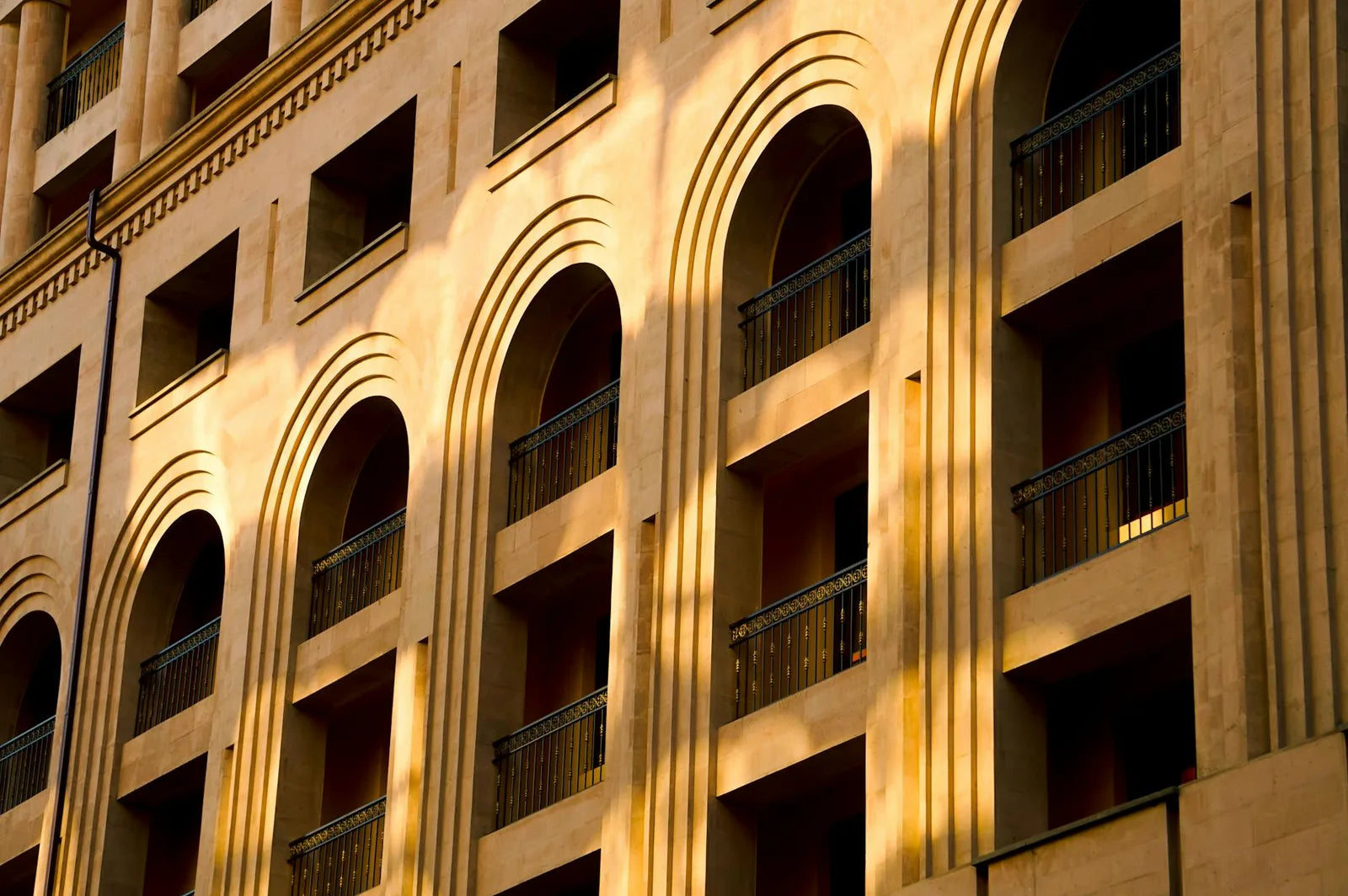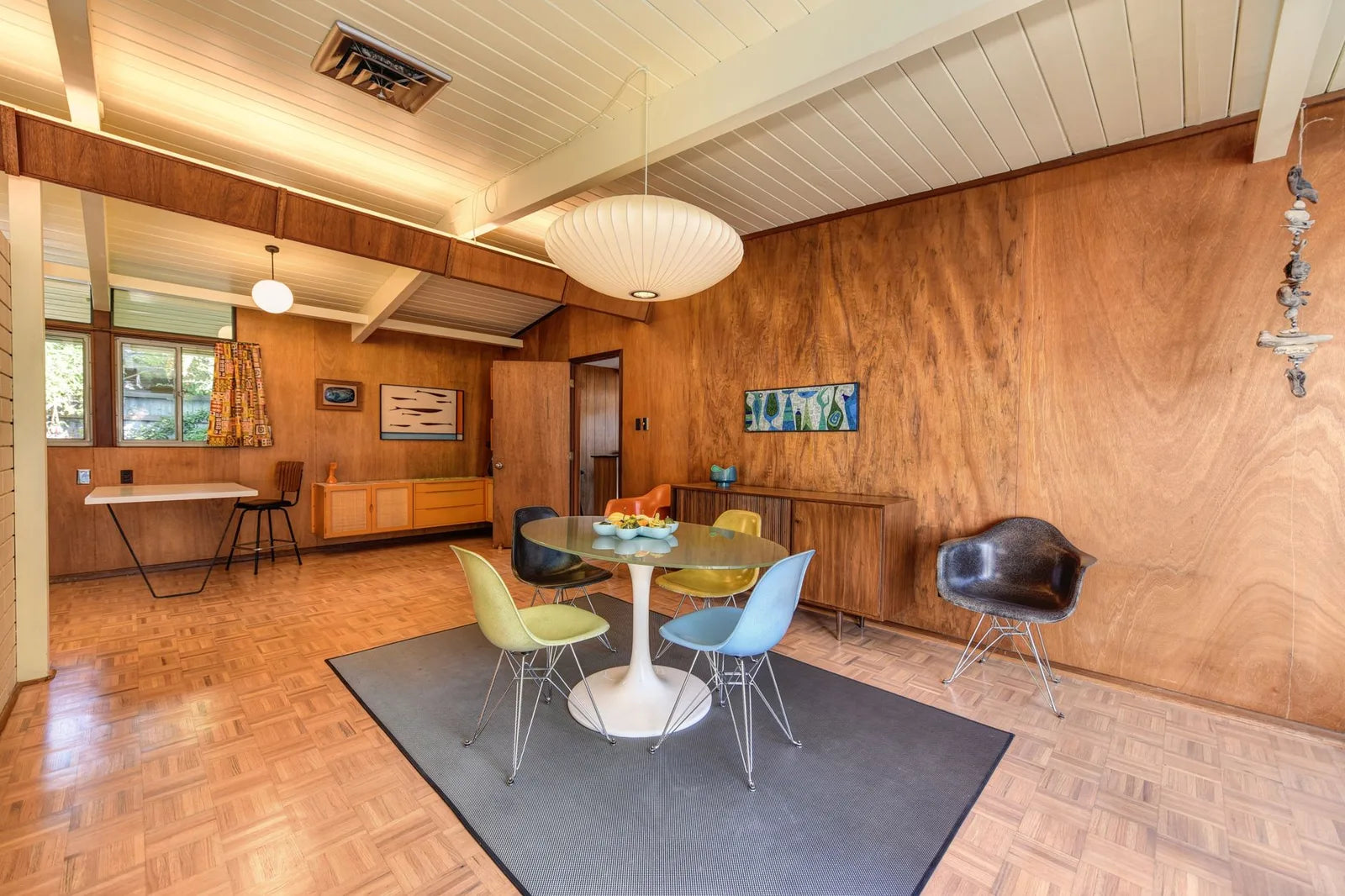
The term "mid-century modern" appeared in the 1980s, first used by design critic Cara Greenberg in her 1984 book of the same name. It describes a style of design and architecture that developed between 1945 and 1970, primarily in the United States and northern Europe. The term is therefore retrospective: when Charles and Ray Eames designed their lounge chair in 1956, nobody spoke of mid-century modern. They spoke of "modern design".
What defines this style: organic lines (curved shapes, tapered legs, lightweight structures), new materials (moulded plywood, fibreglass, aluminium, reinforced plastic), and a functional relationship with objects inherited from the Bauhaus but softened by natural forms. The Eames Lounge Chair, the Saarinen Tulip chair, the Castiglioni Arco lamp: functional objects treated as sculptures.
Posters of the period
Posters from the 1945-1970 period are marked by a rare graphic optimism. The United States emerges from the war as the world's leading power, space is conquered, science is popular, the future is a promise. Airline posters (Pan Am, TWA, Air France) feature a simplified geometric style, vivid colours, expressive forms. World's Fair posters (Brussels 1958, New York 1964) play on the icons of progress.
In France, the tourism poster continues its tradition but changes tone. Late-1950s posters for the Cote d'Azur abandon hand lithography for four-colour offset. The colours are brighter, the composition more photographic, but the spirit is the same: selling a destination as a physical pleasure. The posters for the Brussels World's Fair (1958) and the Atomium mark the transition towards a more naive and popular graphic language.
Integrating these posters into an interior
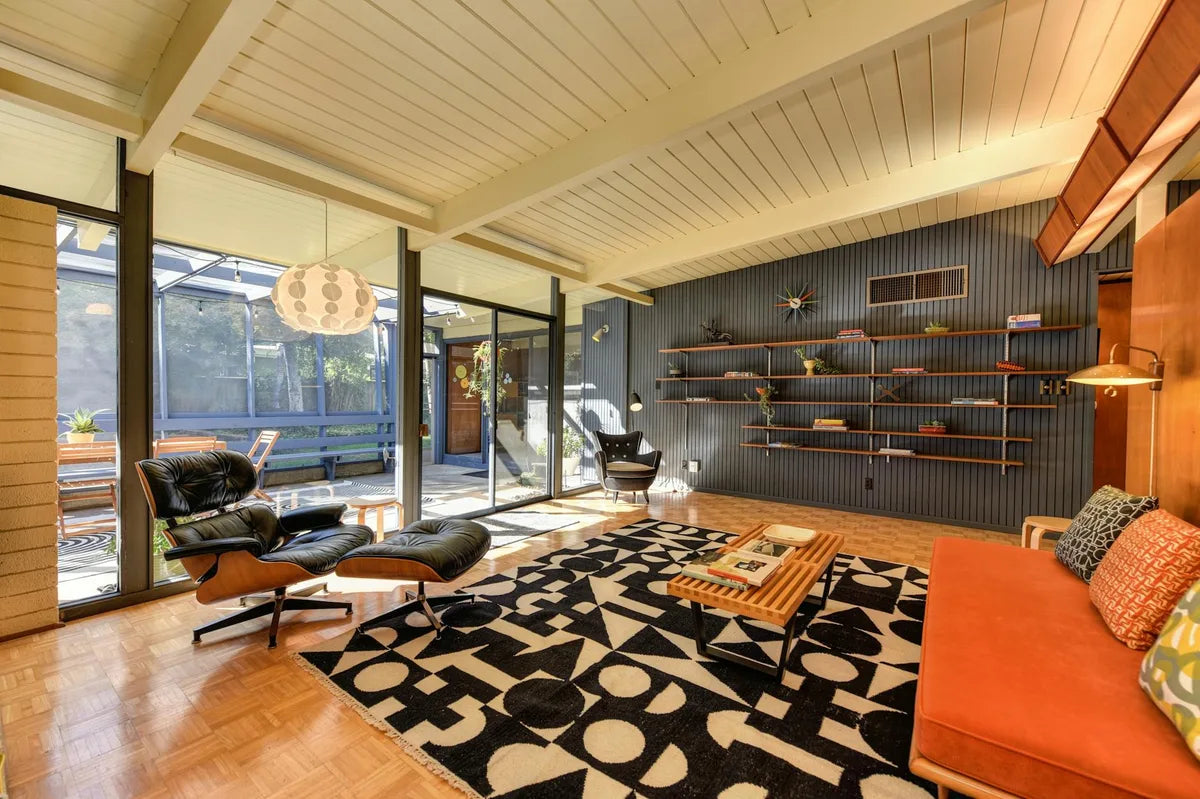
A mid-century modern interior (brass lamp base, ochre velvet sofa, herringbone parquet) calls for posters from the same era or the same aesthetic. A 1960s airline poster, a simplified locomotive illustration, a geometric abstract composition in the room's tones. The frame: thin brass or matte black metal, without an overly thick mat.
Mid-century modern is the first design style conceived for mass production. Eames wanted beautiful and affordable objects. The DSW chair (Dining Side Wood) sold for $16 in 1950. It goes for 700 euros in design shops today.
Avoiding caricature
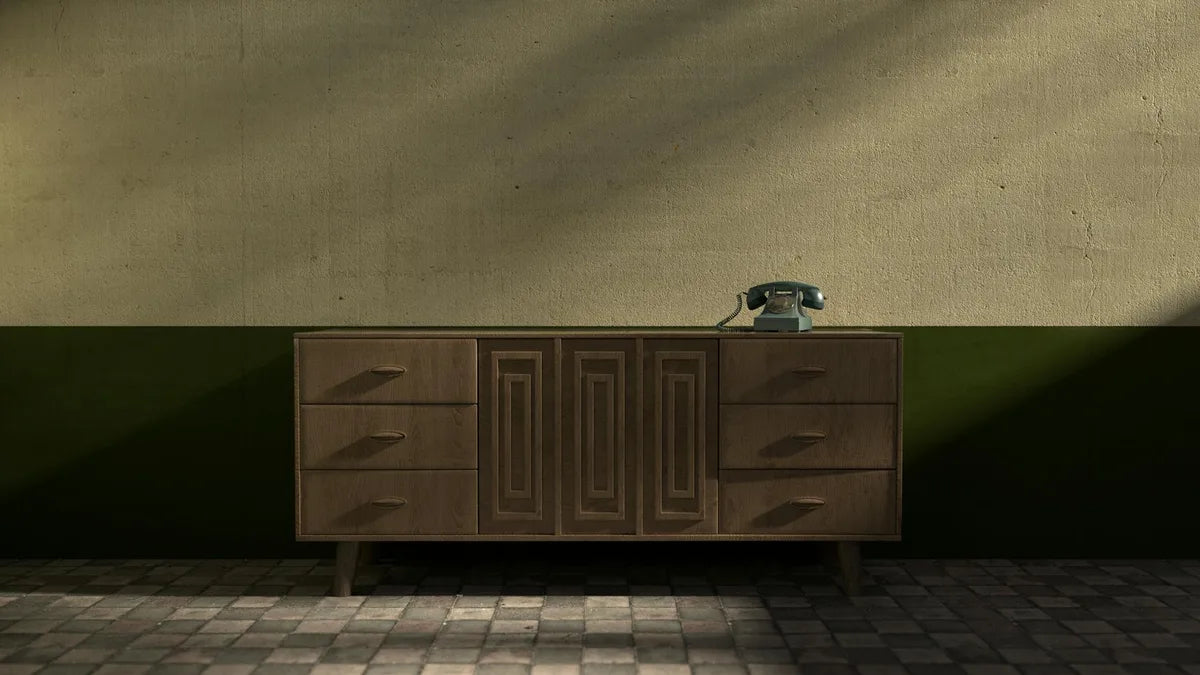
The risk of mid-century modern style in contemporary decoration is caricature: too many tulip bases, too many atom motifs, too much mustard. To avoid this, two rules. First, do not buy objects or posters with a "vintage look" made today to imitate the style - genuine posters from the period (faithful reproductions or originals) are more interesting than pastiches. Second, mix eras: an Eames chair with a 19th-century botanical poster, or a teak sideboard with a 1930s Art Deco composition, is more interesting than an entirely mid-century ensemble.