In 1925, Paris hosted the Exposition internationale des arts décoratifs et industriels modernes. One hundred and seventy-two pavilions stretched along the Seine, between the Grand Palais and the Invalides. The French government had set one rule: no copies, no historical pastiches. Every object on display had to be original. The rule was revolutionary. It officially ended the decorative neoclassicism that had dominated since Napoleon III, and gave its name to what has since been called Art Deco.
The term is a retrospective abbreviation. In 1925, nobody spoke of Art Deco. People said "modern style," "style 25," or simply "the new style." It was in 1966, for the retrospective exhibition held at the Musée des Arts décoratifs in Paris, that the name was fixed for good. By then the style was forty years old and clear enough to be treated as a closed period.
The Sources of the Style
Art Deco has no single founding father. It is a synthesis. The sources are multiple: Cubism (geometric forms, angles), African and Oceanic art (masks, reliefs, rhythmic patterns), the German Bauhaus (the tension between art and industry), and the decorative arts of the Ottoman Empire and Asia. The 1925 Exposition brought all these currents together in one place.
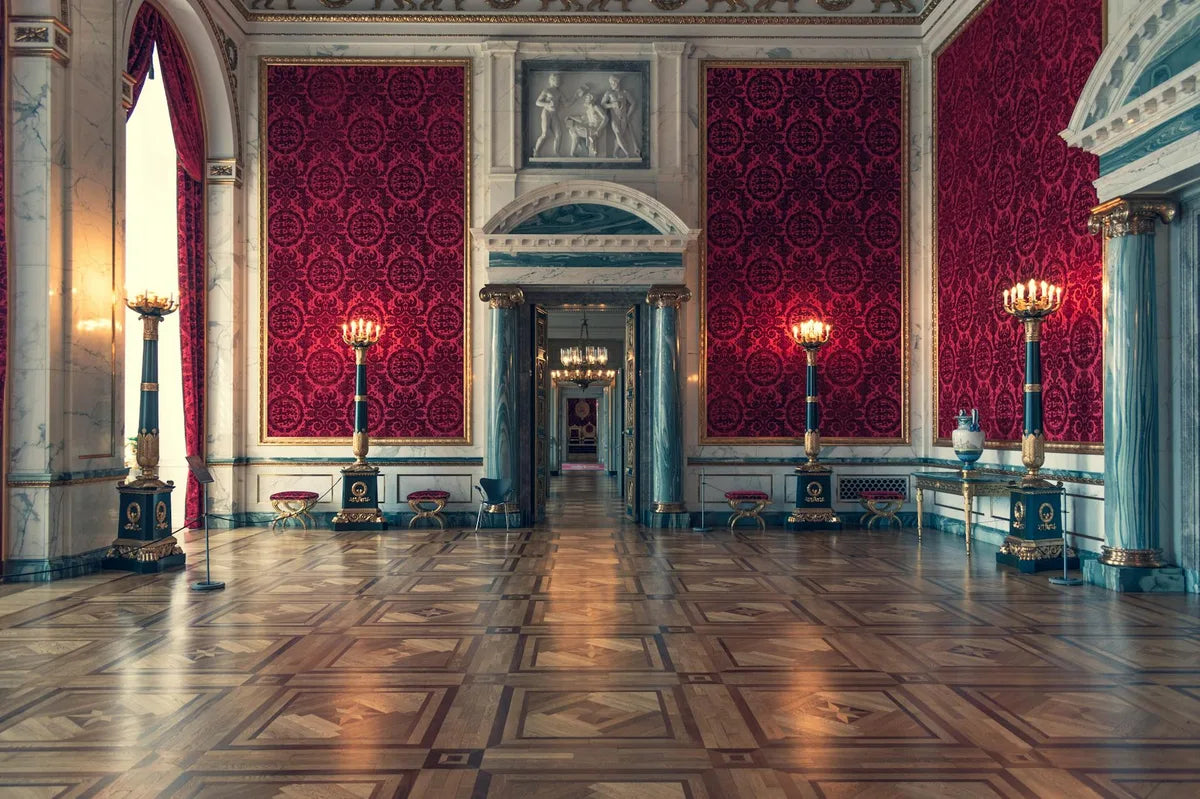
Poster artists seized the style before the architects. Cassandre from 1925, Loupot, Carlu and Colin worked in an aesthetic that became recognizable: clean flat colours, strict geometry, typefaces drawn like architectures, strong contrasts. The poster was the most visible form of the style. It covered the walls of the city just as buildings were only beginning to change.
Crossing the Atlantic
New York adopted Art Deco with particular intensity. Between 1928 and 1932, the city built three of the world's tallest structures in Art Deco style: the Chrysler Building, the Empire State Building, and Rockefeller Center. William Van Alen, the architect of the Chrysler, crowned his skyscraper with a 56-metre spire of stainless steel fabricated inside the building, hoisted by surprise at the last moment to beat the neighbouring tower in height. The gesture was perfectly Art Deco: spectacular, precise, technical, unexpected.
Art Deco was the first style conceived simultaneously for the object, the poster, the facade and the interior. Before it, these disciplines did not speak to one another.
Why Art Deco Always Returns
The style survives because it is legible. A geometric flat colour, a golden gradient, a compressed typeface: Art Deco is immediately recognizable, even without naming it. In contemporary interiors, this legibility is an advantage. An Art Deco poster in a minimalist interior creates an immediate, sharp contrast, without ambiguity. It brings density without disorder.
Our Art Deco poster reproductions cover the period 1922-1939, from ocean liners to railway companies, from luxury hotels to perfume brands. Each poster has been selected for the quality of the original composition, the rarity of the source document, and the colour retention when printed on 275 g/m² fine-art paper.