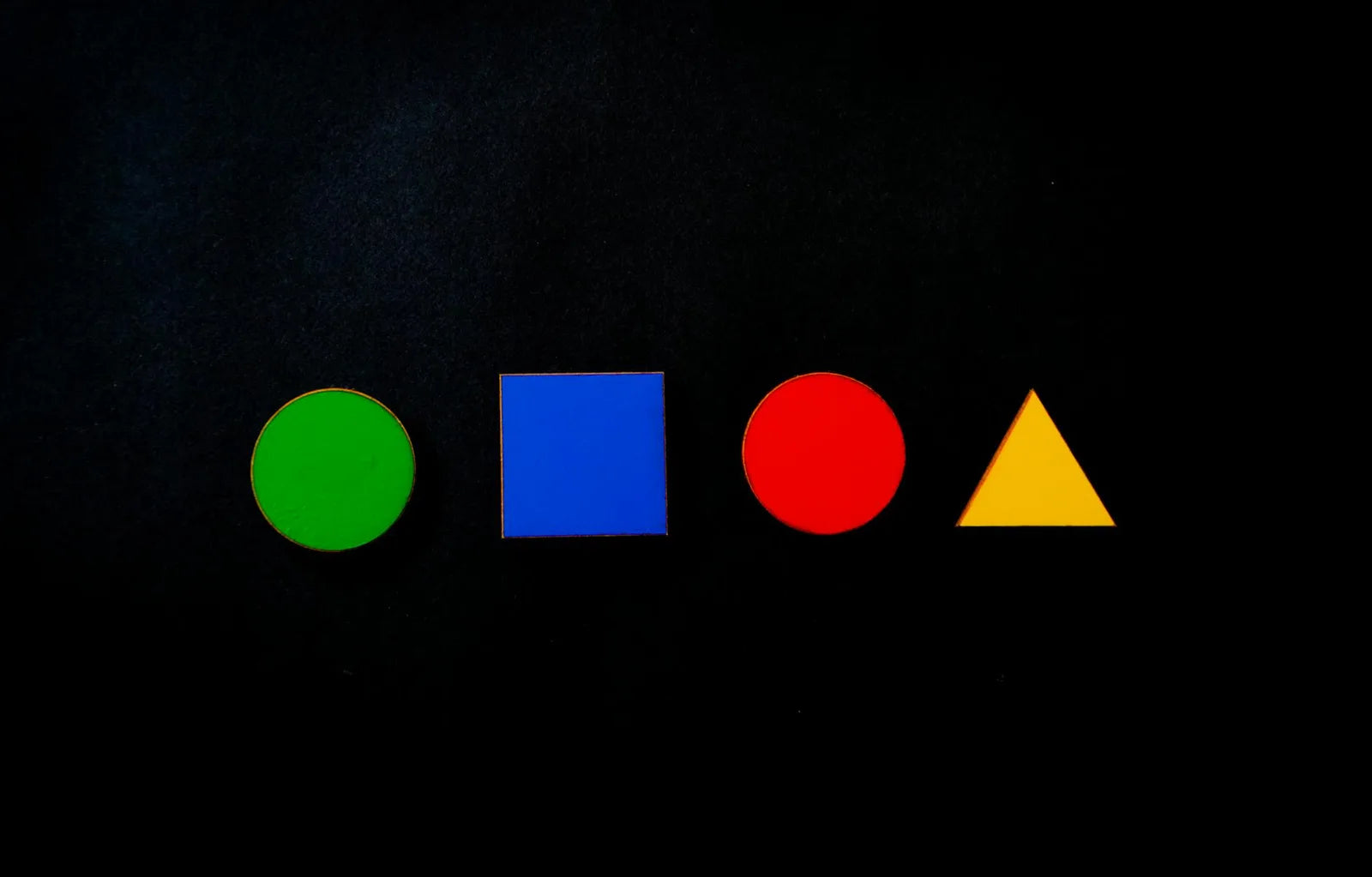
Moscow, early 1923. Alexander Rodchenko, 32, a former student of the Kazan Art School, shares a freezing studio in the premises of the Glavpolitprosvet, the central committee for Soviet political education. He has just stopped painting two years earlier, after his "Monochromatic Triptych" (pure red, pure yellow, pure blue) shown at the 5x5=25 exhibition in September 1921 in Moscow. The gesture is radical: he declares painting finished, done, surpassed. From now on, he says, graphic design, photography and industrial design are the true revolutionary arts. What he does from 1923 on will give its form to Soviet art of the 1920s, and more widely, to the entire grammar of twentieth-century activist graphic design.
The context is striking. The October Revolution is four years old, the civil war has just ended, the country is rebuilding. Lenin is still alive, paralyzed. "War communism" has given way to the NEP (New Economic Policy), which reintroduces a small market to revive the economy. Artistic creation is supposed to accompany social transformation. Rodchenko, like Vladimir Tatlin, Lyubov Popova, Varvara Stepanova (his partner), El Lissitzky, Gustav Klutsis, holds that art must stop being contemplative and become productive. They coin a word: "production art". Posters, packaging, uniforms, furniture, work clothes, book covers are all fields of experiment. That is what will later be called Russian Constructivism.
Photomontage as a political tool
The main invention of Russian Constructivism in graphic design is photomontage. Rodchenko, in 1923, starts cutting up news-agency photographs and recomposing them into new images. He assembles heterogeneous fragments (a face, a machine, a crowd, a typographic slogan) on the same plane, in dynamic tension. The diagonal is the preferred axis: it introduces tension, refuses the bourgeois stability of the horizontal-vertical frame. Typography itself becomes graphic: huge letters, sometimes in reversed Cyrillic, occupying half the composition. Color is limited to black, red, white, sometimes a yellow. A budget discipline (the Soviet print shops of 1923 cannot afford four-color) turns into an aesthetic stance.
Commissions pour in. Rodchenko signs between 1923 and 1925 more than fifty advertising posters for the Mosselprom state stores, the GUM department store, the Goz publishers. He collaborates with the poet Vladimir Mayakovsky who writes the slogans ("No spoonful of Mosselprom anywhere else, anywhere else"). It is a productive friendship: the poet and the designer form an emblematic duo. Mayakovsky kills himself in April 1930. Rodchenko keeps going, drifts more and more toward pure photography, and signs for the magazine USSR in Construction photo-reportages of unmatched graphic elegance. He dies in Moscow in 1956 at 64, marginal, his work having fallen out of favor under Stalin from 1934 onward.
El Lissitzky, the diplomat of the movement
El Lissitzky (Lazar Markovich Lissitzky), born in 1890 in the Smolensk province, is the other major figure. He travels. He teaches in Vitebsk in 1919, where he meets Kazimir Malevich and Suprematism. He leaves for Berlin in 1922 as cultural representative of the USSR, meets there Walter Gropius, Theo van Doesburg, Kurt Schwitters. He publishes there in 1923 the portfolio "Proun", a series of abstract compositions between architecture and painting, on the border between Suprematism and Constructivism. Through the 1920s, he is the bridge between the Russian avant-garde and the Bauhaus, between De Stijl and Moscow. His posters for the "Pressa" exhibition in Cologne in 1928 are among the most innovative of the century: huge photomontages, staged space, animated typography. He dies in Moscow in December 1941, sick and exhausted, during the Wehrmacht siege of the capital.
"One has to start seeing," Rodchenko wrote in 1928, "from every possible point, except the human navel."
Living with a Constructivist poster
A Constructivist poster, or its contemporary tribute, calls for a clear wall and a frontal reading. No gallery wall to dilute it, no decorative clutter nearby. One piece on a light wall, at eye level. The frame: matte black, thin profile, extending the blacks of the composition. Oak does not work: it softens the formal aggression the work claims. The cream mat helps give it air, but can be dropped if the composition already holds enough white. Size matters: those posters were made to be plastered large on Soviet city walls, and they work better at 70 by 100 than in small formats. In small format the typographic diagonal loses its punch, the photomontage becomes unreadable.
The decorative environment matters too. Russian Constructivism pairs well with a very contemporary, light-toned interior, with Scandinavian or Italian 1960s furniture, brushed metal, industrial shelving. It pairs badly with a classical bourgeois interior, gilded furniture, moldings, patterned fabrics. Its aggressive composition demands clear lines around. In an office, a workshop, a loft, the poster works immediately. In a classical living room it feels misplaced. The red and black diagonal is a political statement in itself, even emptied of its revolutionary context: the eye feels it.
Three threads to start with
- A Rodchenko photomontage or its tribute: typographic diagonals, red on white, 70 by 100. Thin matte black frame.
- A pure typographic Constructivist poster, no image. The most radical piece, best on a single wall.
- A Bauhaus poster from the same decade, in the geometric Bauhaus collection. The dialogue between Moscow and Dessau is immediate.
At Montmartre Poster, tributes to the Russian avant-garde and to Constructivism live in the geometric Bauhaus collection, which broadens the field to the whole 1920s European decade, and in the Art Deco collection, which shows how that language spread west. To follow the circulation of ideas between Moscow, Weimar and Paris, see our article The Bauhaus, when the workshop changed the world, which describes El Lissitzky's role as a bridge.