Verdun, February 1916. Fernand Léger, 35, a Cubist painter recognized in Paris for five years, has been mobilized in the engineering corps since August 1914. He serves at the front in the Argonne, then at Verdun, where the battle has raged for weeks. He survives mustard-gas exposure in September 1916, is evacuated to the hospital. During those two years at the front, he draws. The Verdun notebooks show dismantled cannons, engine parts, steel plates, airplane propellers, machine-gun wheels, cylinders, gears. Léger will later say that the direct encounter with industrial machinery changed everything. "I was dazzled," he writes in 1923, "by the open breech of a 75 in the sunlight. The magic of light on white metal. It was more beautiful than any painting I had ever seen."
Léger is born on February 4th 1881 in Argentan, in the Orne. Son of a cattle breeder, he serves an architectural apprenticeship in Caen between 1897 and 1899, then arrives in Paris in 1900. He fails the École des beaux-arts in 1903 but enrolls at the Académie Julian, where he meets Jean Metzinger. He settles at La Ruche, an artist colony in the 15th arrondissement, where he crosses paths with Modigliani, Soutine, Chagall, Apollinaire. In 1910, he joins Robert Delaunay, Picasso and Braque in the Cubist movement, of which he becomes a main figure. His "Nudes in the Forest" (1909-1911) are radical Cubist compositions with tubular, almost mechanical forms ahead of their time. When war breaks out, he is 33, an established painter, and the front will shift everything.
Purism and the birth of L'Esprit Nouveau
1918. The war ends. Léger returns to Paris, transformed. He publishes in 1923 a crucial essay, "The Aesthetic of the Machine", in which he argues that the mechanical beauty of industrial objects (a piston, a connecting rod, an airplane fuselage) must enter painting. At the same moment, the painter Amédée Ozenfant and the architect Charles-Édouard Jeanneret (the future Le Corbusier) publish in 1918 the manifesto "After Cubism", which founds the "Purist" movement. The program: refuse Cubist fragmentation, return to the full, geometric, legible form. The machine is the ideal. The magazine "L'Esprit Nouveau", published from 1920 on by Ozenfant and Le Corbusier, welcomes Léger as a fellow traveler. Purism lasts five years (1918-1925), produces a few major works (Léger's "Three Musicians" in 1924, Le Corbusier's "Pavilion of the New Spirit" at the 1925 Expo), then dissolves. But its formal vocabulary spreads.
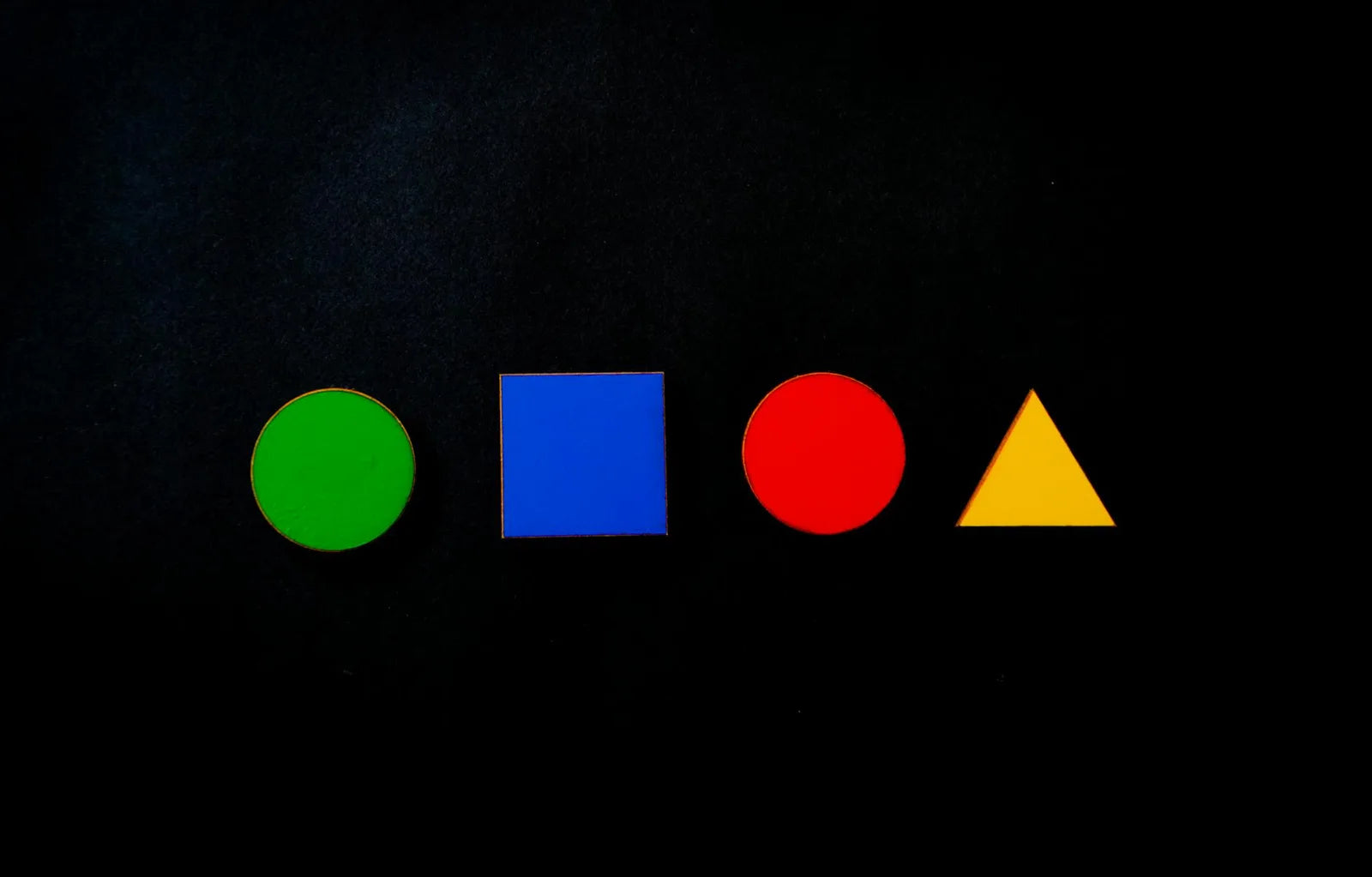
Léger's grammar of the 1920s-1930s is recognizable at a glance. Cylindrical and tubular forms, thick black contours, restricted palette (red, blue, yellow, black, white), flats without modeling, frontal composition. He paints "Mechanics" (1920), "Disks" (1918), "Mechanical Animals" (1923). In 1924, he signs with Dudley Murphy the film "Ballet mécanique", a sixteen-minute avant-garde film that mixes close-ups of industrial objects (a piston, a whisk, a hat), female faces and dancing numerals. It is one of the most radical avant-garde films of the 1920s. Léger also opens in 1924 a painting school, the Académie de l'Art Moderne, where he teaches students from all over the world (Erik Olson, Otto G. Carlsund, Maud Sandberg).
American exile and monumental commissions
1940. The German invasion drives Léger to flee to New York, like many French artists (Matta, Masson, Tanguy, Mondrian). He stays five years, teaches at Yale, at Mills College in California. He discovers America: the lit-up signs of Broadway, the highways, the pin-ups. His American paintings ("Divers" 1942, "Cyclists" 1944) introduce loud colors as flat areas, sometimes detached from the figure outline, as though the paint were spilling. He returns to France in 1945, settles in Gif-sur-Yvette in the house that will become his museum. He signs monumental decors: the Assy chapel in Haute-Savoie (1949), the stained-glass windows of the church at Audincourt (1951), the mosaics of the auditorium of the Council of Europe in Strasbourg (1953). He dies on August 17th 1955 at 74, of a heart attack in his studio. The Fernand Léger national museum opens in Biot in 1960, on land he had bought just before his death.
"Beauty is everywhere," Léger wrote in 1923. "In the order of your pans on the white wall of your kitchen, perhaps more than in your eighteenth-century living room or in the official museums."
Living with a Léger-inspired poster
A Léger-inspired poster wants a contemporary environment and plenty of light. Chromatic saturations (blood red, cobalt blue, lemon yellow on black and white) sing in natural light, smother in warm lighting. Pick a south or east-facing room. The frame: thick matte black, holding the composition and playing contrast with the bright colors. Oak works poorly, it softens the palette. Size matters: Léger thought big. His canvases are often 2 by 1.50 meters. A reproduction at 70 by 100, even 90 by 130 if you have the room, keeps the industrial monumentality. In small format, the mechanical forms lose their weight.
The ideal decorative environment is light, geometric, orderly. Léger pairs well with Scandinavian furniture, metal, glass, "industrial chic" interiors. It also pairs with mid-century modern and Bauhaus, with which it shares geometric grammar. It pairs badly with classical furniture, moldings, flowery fabrics: cohabitation creates a permanent dissonance. The rule that works: if you hang a Léger, hang it alone, on a clear wall, with minimalist furniture around. It will then carry the whole room.
Three threads to start with
- A machinist composition inspired by the "Mechanics": cylindrical forms, four-saturated-color palette, black contours. 70 by 100, thick black frame.
- A Purist poster in the L'Esprit Nouveau spirit: stylized industrial objects, matte palette. Quieter, more accessible, ideal in an office.
- A contemporary abstract composition in the modern abstract collection, whose Purist-Léger heritage is immediately visible.
At Montmartre Poster, tributes to Purism and the age of the machine live in the modern abstract collection. To follow the lineage from Cubism to pop art via Purism, see our articles on Mondrian and De Stijl, on the Bauhaus and on pop art, which describe the successive stages of that crossing of the twentieth century.