In 1753, Carl von Linnaeus published his "Species Plantarum", the first systematic classification of the plant kingdom. To illustrate his twenty-five volumes, he had to invent a visual genre: the scientific botanical plate. Each illustration had to show simultaneously the whole plant, the open flower, the cross-section of the fruit, and the detail of the pollen. In a single image, an entire plant life.
The illustrators who answered this commission - for Linnaeus and then for the great scientific expeditions of the 18th century - were true artists. Pierre-Joseph Redoute drew the roses of Josephine Bonaparte at Malmaison between 1798 and 1817. Ferdinand Bauer accompanied the Flinders expedition to Australia in 1801 and brought back 1,500 drawings of never-before-described plants. Sydney Parkinson died at 25 on Cook's Endeavour in 1771, leaving 900 unfinished plates.
Constraint as aesthetic
What makes the botanical plate beautiful is its constraint. The illustrator must be precise (it is a scientific document), legible (botanists use it to identify species), and concise (everything must fit on one sheet). This triple constraint produces a particular aesthetic: white background, fine line, exact colours, no superfluous decoration.
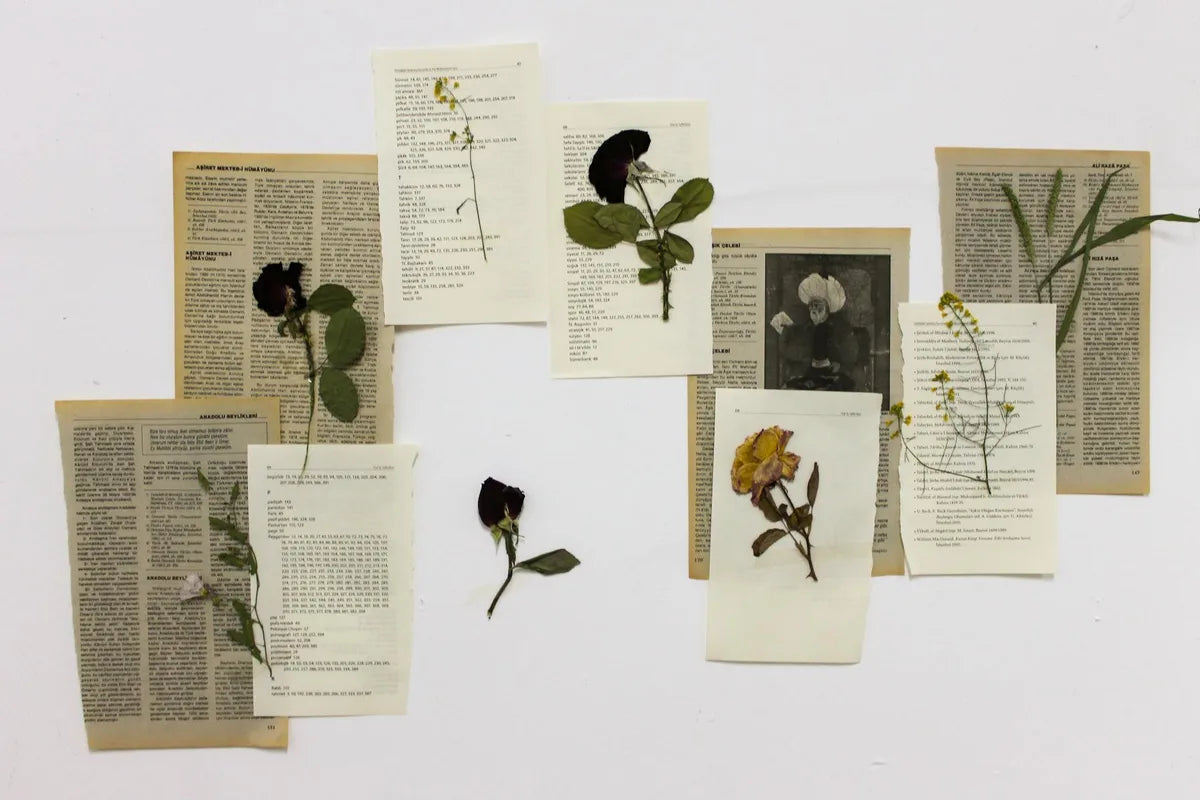
The composition itself is dictated by botany. The plant is presented facing front, its branches visible, its leaves slightly turned to show front and back. The flower is shown open. If it is too small to be seen with the naked eye, an enlargement in the margin shows the detail of the pistil and stamens. It is this analytical gaze, this methodical unveiling, that gives the botanical plate its strange beauty.
From the laboratory to the living room
In the 19th century, botanical plates left the cabinets of scholars and entered bourgeois homes. Parisian publishers realised that these scientific images had a decorative market. "Picturesque Flora", illustrated encyclopaedias in weekly fascicles, and collections of hand-coloured plates invaded libraries. The botanical plate became an object of curiosity, ornament, and prestige.
William Morris in England drew directly from them for his fabrics and wallpapers. Art Nouveau made them its primary material: the curves of the stem, the hollow of the corolla, the spiral of the fern leaf became repeating motifs on facades, ceramics, and jewellery. The botanical plate gave rise to an entire style.
Redoute drew 486 plates of roses between 1798 and 1817. The complete series, bound in three volumes, trades today between 100,000 and 400,000 euros depending on condition.
Today in interior decoration
The botanical plate has become one of the most stable decorative motifs of the last decade. It works because it is neutral without being cold, precise without being austere, old without being dusty. In a contemporary living room, a series of three botanical plates in oak frames, evenly spaced, brings exactly what one seeks: an organic visual presence, a touch of history, a natural coherence.

Our botanical selection covers European illustrations from the 18th and 19th centuries, with an emphasis on flower and tropical plant plates. The colours have been calibrated against the originals held at the Bibliotheque nationale de France and the Natural History Museum in London.