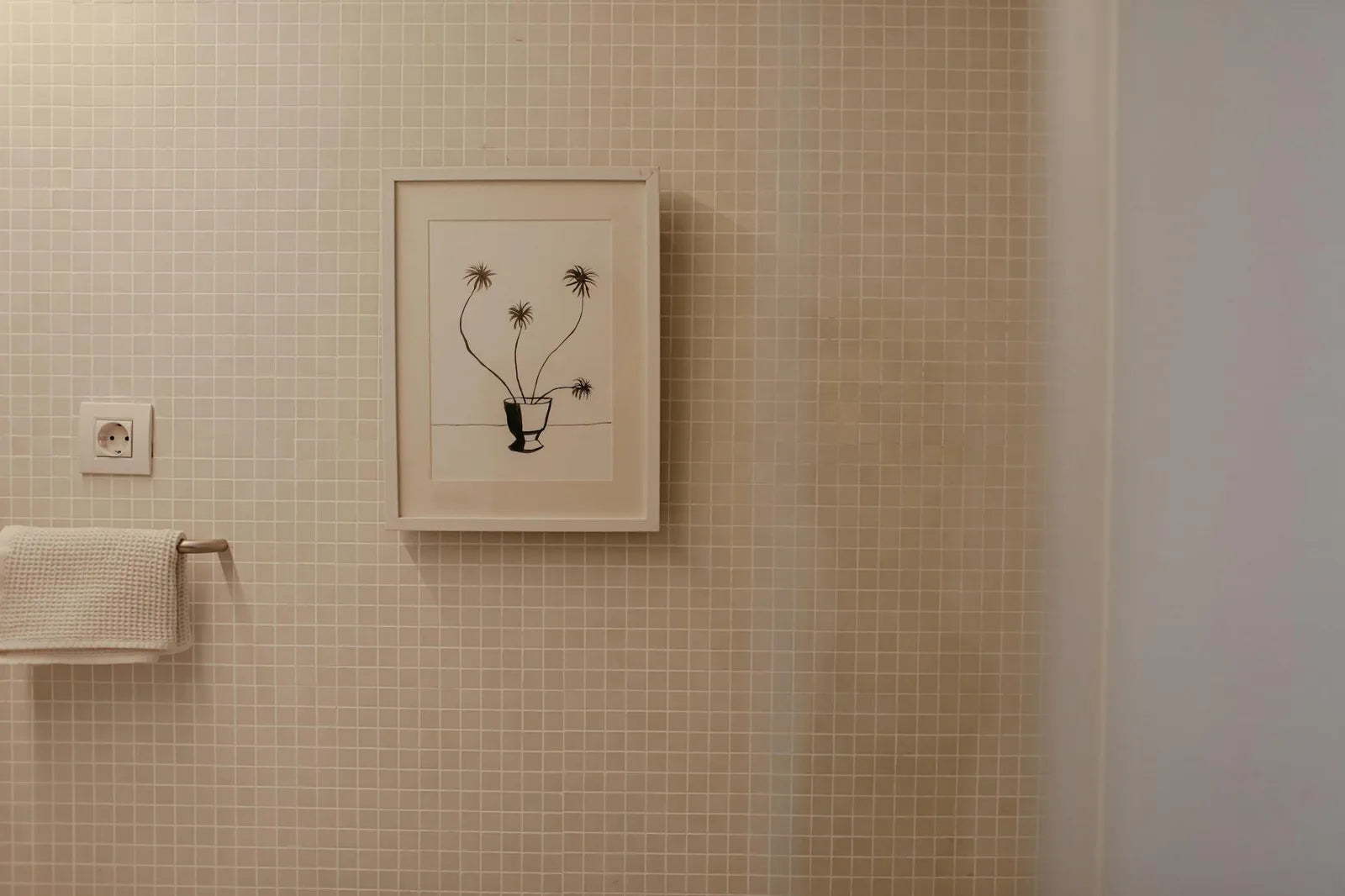
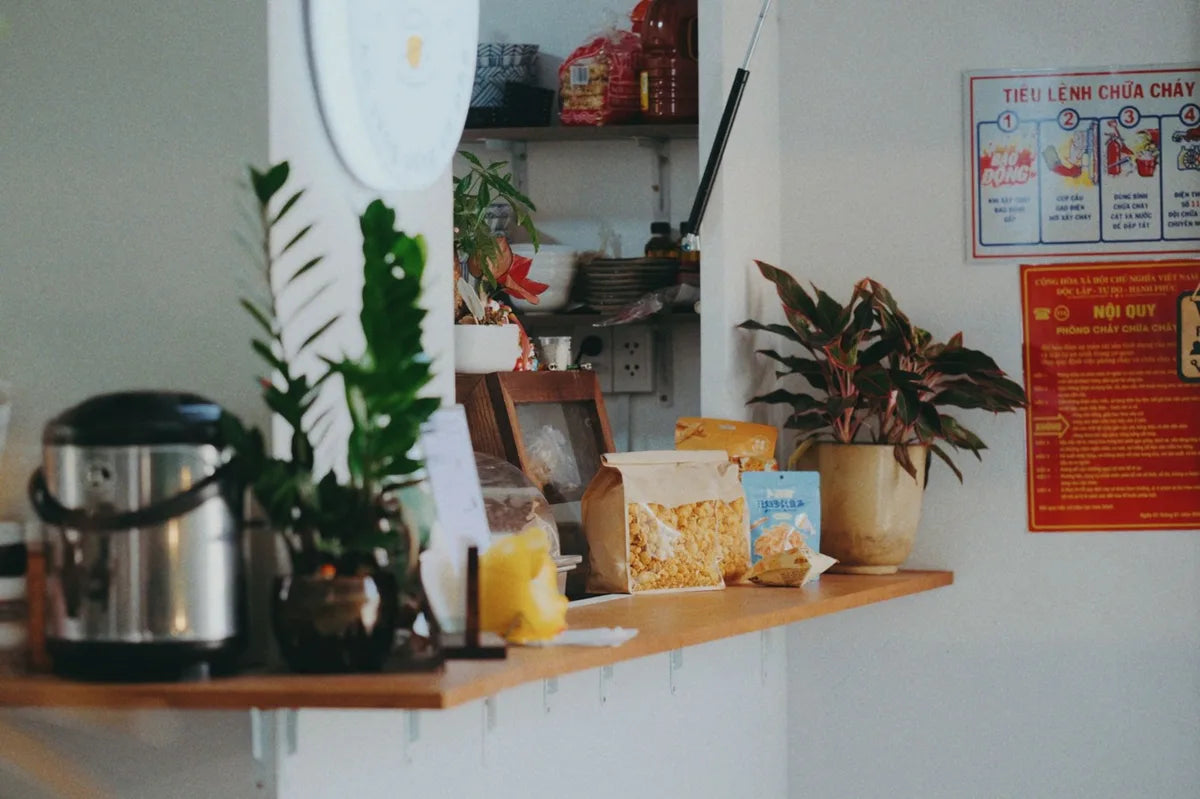
The kitchen is the hardest room to decorate with posters. The reason is physical: cooking steam, temperature swings, and ambient humidity damage paper faster than anywhere else. The reason is also aesthetic: the kitchen often has its own visual constraints - tiled splashbacks, cabinet fronts, appliances - and posters must compose with an already busy environment.
The ideal format in a kitchen is 30 by 40 centimetres. It fits into the residual spaces - the wall between two rows of cupboards, the corner above the hob if you have no extractor hanging there - without dominating. Viewing distance in a kitchen is often short: you walk past, you read while cooking. A larger format would be badly placed, too close, oppressive.
Subjects that work in the kitchen
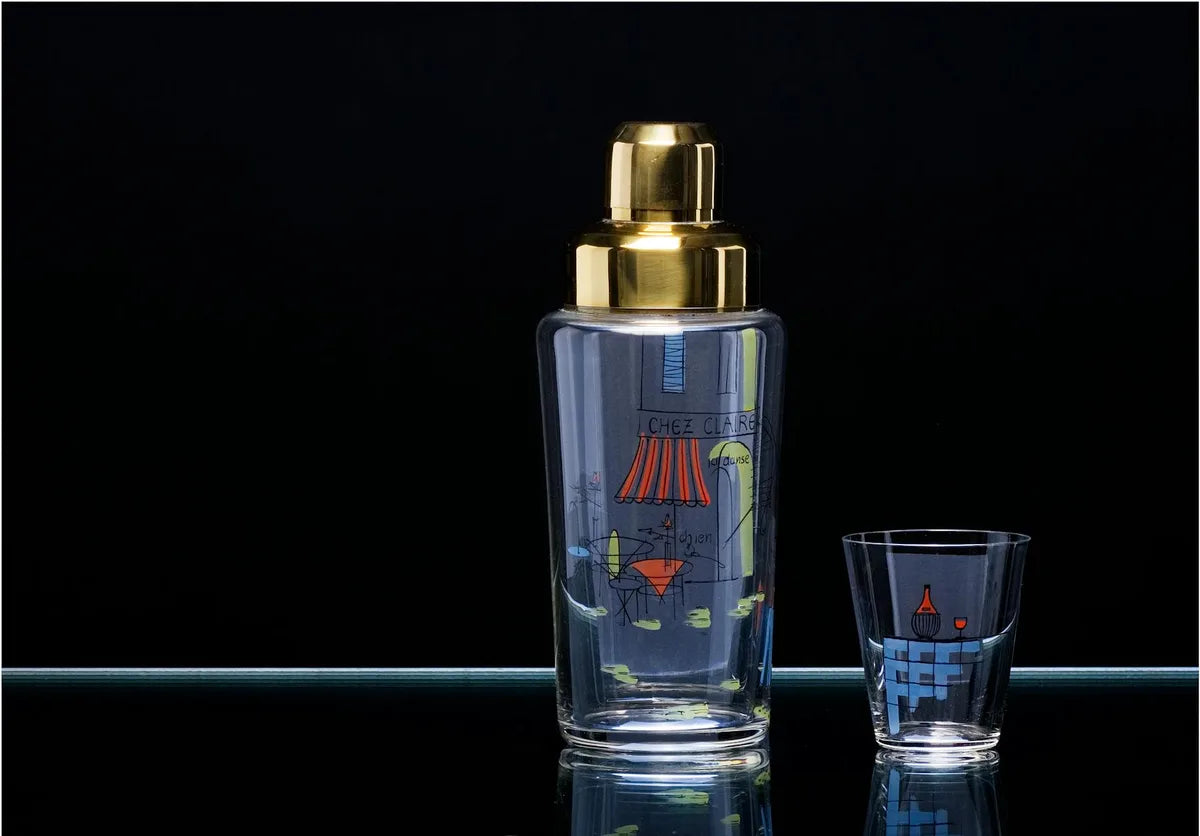
Vintage cocktail posters are the most coherent choice. They were designed for bars and restaurants, spaces where heat and activity dominate. A 1950s Campari poster, a 1930s Parisian brasserie menu, a classic cocktail recipe illustration: these images have an energy that matches the kitchen. They make no claim to the gravity of a museum painting.
Botanical plates of fruit and vegetables also work very well. A lemon tree illustration by Redoute, an 18th-century citrus plate, an aromatic herb herbarium: these images are consistent with the room's function. They bring a discreet elegance without thematic mismatch. This is the most neutral choice, the one that suits the widest range of kitchen aesthetics.
Typography in the kitchen
Typographic posters work in the kitchen when they are legible from a distance and when their message is appropriate. A "Bon appetit" in Art Deco lettering, a list of classic cocktails set in the style of a vintage menu, an espresso coffee illustration with an English or French caption: these are posters that "comment" on the space without dominating it.
In the kitchen, a poster says something about how the room is used. It is not the place for a Matisse or a Hokusai: that would be out of place, slightly condescending toward the artwork.
Protecting the poster in a damp space
- A well-sealed frame, gasket correctly fitted. Steam enters through gaps, not through the glass.
- Glass or Plexiglas - never a bare poster. In the kitchen, bare paper yellows within months.
- Avoid the wall directly above the hob or the sink. Steam is too concentrated there.
- If you like a poster on the back of a cabinet door, frame it anyway. Temperature swings on cabinet doors are significant.
- A cream passe-partout between the paper and the glass creates an air gap that slows condensation.