In 1891, the first poster for the Tour de France cycling race does not yet exist, because the Tour de France does not yet exist (it will be created in 1903). But cycling posters do. The bicycle is the fashionable vehicle of the 1890s, and manufacturers (Cycles Peugeot, Cycles Gladiator, Cycles Sphinx) commission posters from artists to promote their models. These posters show cyclists in full movement, lithe, in spring landscapes. The sporting gesture is used as a selling argument: this bicycle will make you fast, elegant, modern.
The style of these late-19th-century posters is directly influenced by Art Nouveau: the curved line, the hair in the wind, the clothes that embrace speed. Jules Cheret, the master of the Parisian poster, signs several cycling posters. Toulouse-Lautrec makes one or two. Alphonse Mucha, better known for his showbill posters, contributes to some cycle manufacturer commissions.
The skiing poster: invention of the 1920s
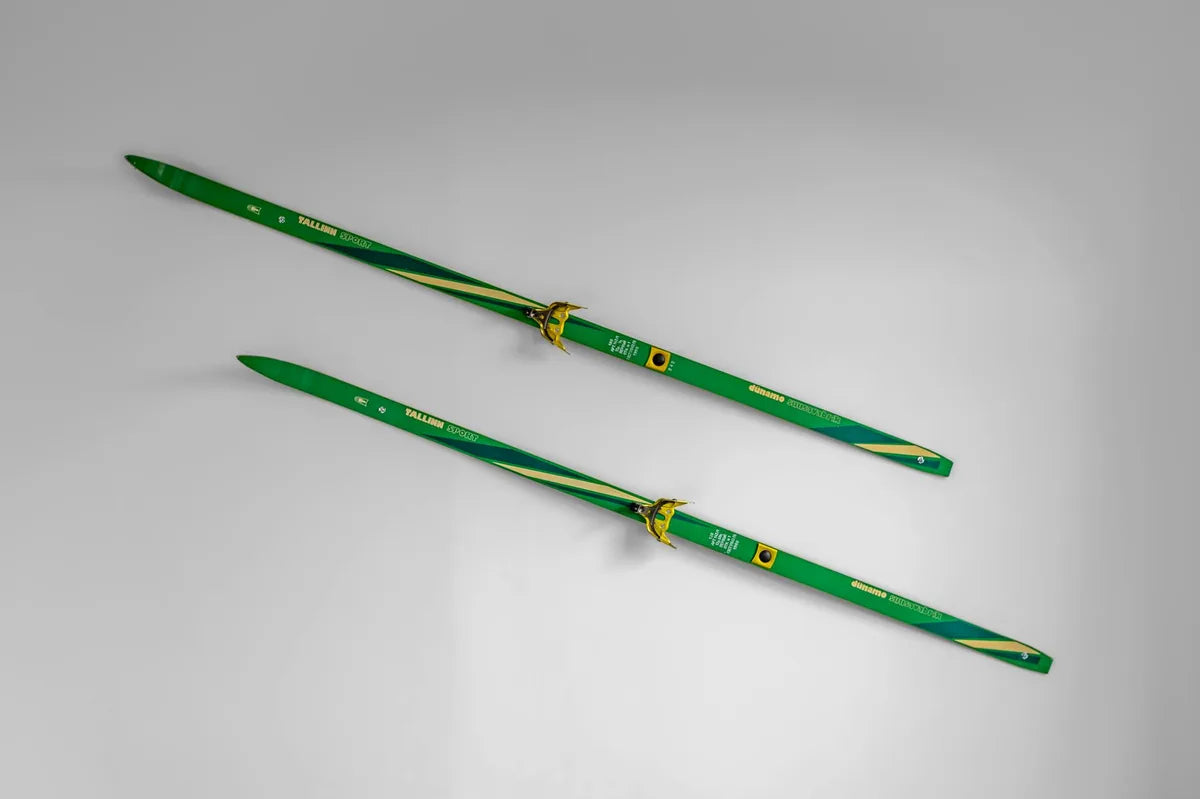
Alpine skiing becomes a mass sport in the 1920s. The railway companies serving the Alps and the Pyrenees commission posters to draw tourists to their resorts. The skier becomes an immediately recognisable graphic character: coloured outfit, raised poles, gesture suspended in the snow. Most of these posters are in lithochromie, six to eight colours, on a blue or off-white sky background.
Roger Broders signs several of the finest skiing posters of the PLM era. His skiers are always slightly idealised: perfect posture, a smile, the sky always blue. That is the nature of the tourist poster: it sells a dream, not a reality. Nobody falls, the cold does not exist, the ski lift barely appears in compositions (the first T-bars date from 1934).
The tennis poster: gesture and elegance
Tennis is an aristocratic sport until the 1970s. Its posters reflect this elegance: players in pure white, grass courts, stands in a discreet background. The Wimbledon and Roland-Garros posters of the 1930s are in this register. The composition highlights the service gesture (the raised arm, the racket extended) rather than speed or power.
The 1903 Tour de France finished with 21 riders out of 60 starters. The poster for the first edition, lithographed in 10,000 copies, was sold by criers in the streets of Paris.
In a contemporary interior
Vintage sport posters work in any interior where you want a note of energy and history without falling into sporting kitsch. They are particularly well suited to home offices (they evoke effort without heaviness), to hallways of houses or apartments (50x70 format in a row), and to teenagers' rooms (strong graphics without aggression).
A practical piece of advice: choose a sport you practise or enjoy watching. A tennis poster in the office of a tennis player, a cycling poster in the hallway of a keen cyclist: these thematic affinities give the poster a personal relevance that a generic decorative piece does not have.
![Sweat à capuche New York Tennis Monumental 49. design textile unisexe [color:green] [view:front]](https://cdn.shopify.com/s/files/1/1061/4862/6757/files/2cb89ba95904a520f86ce637e6ae37d9_800x.png?v=1788135115&width=100&height=150&crop=center)
![T-shirt New York Tennis Monumental 48. design textile unisexe [color:green] [view:front]](https://cdn.shopify.com/s/files/1/1061/4862/6757/files/89fd626a2c9a2818acb60356a3bfd336_800x.png?v=1788135093&width=100&height=150&crop=center)
![T-shirt New York Tennis Monumental 47. design textile unisexe [color:navy] [view:front]](https://cdn.shopify.com/s/files/1/1061/4862/6757/files/1ddca3b36d8900d36a14a745152adca6_800x.png?v=1788135070&width=100&height=150&crop=center)
![T-shirt New York Tennis Monumental 46. design textile unisexe [color:black] [view:front]](https://cdn.shopify.com/s/files/1/1061/4862/6757/files/47263dac828764e4c7bae83c62eb25a0_800x.png?v=1788135047&width=100&height=150&crop=center)