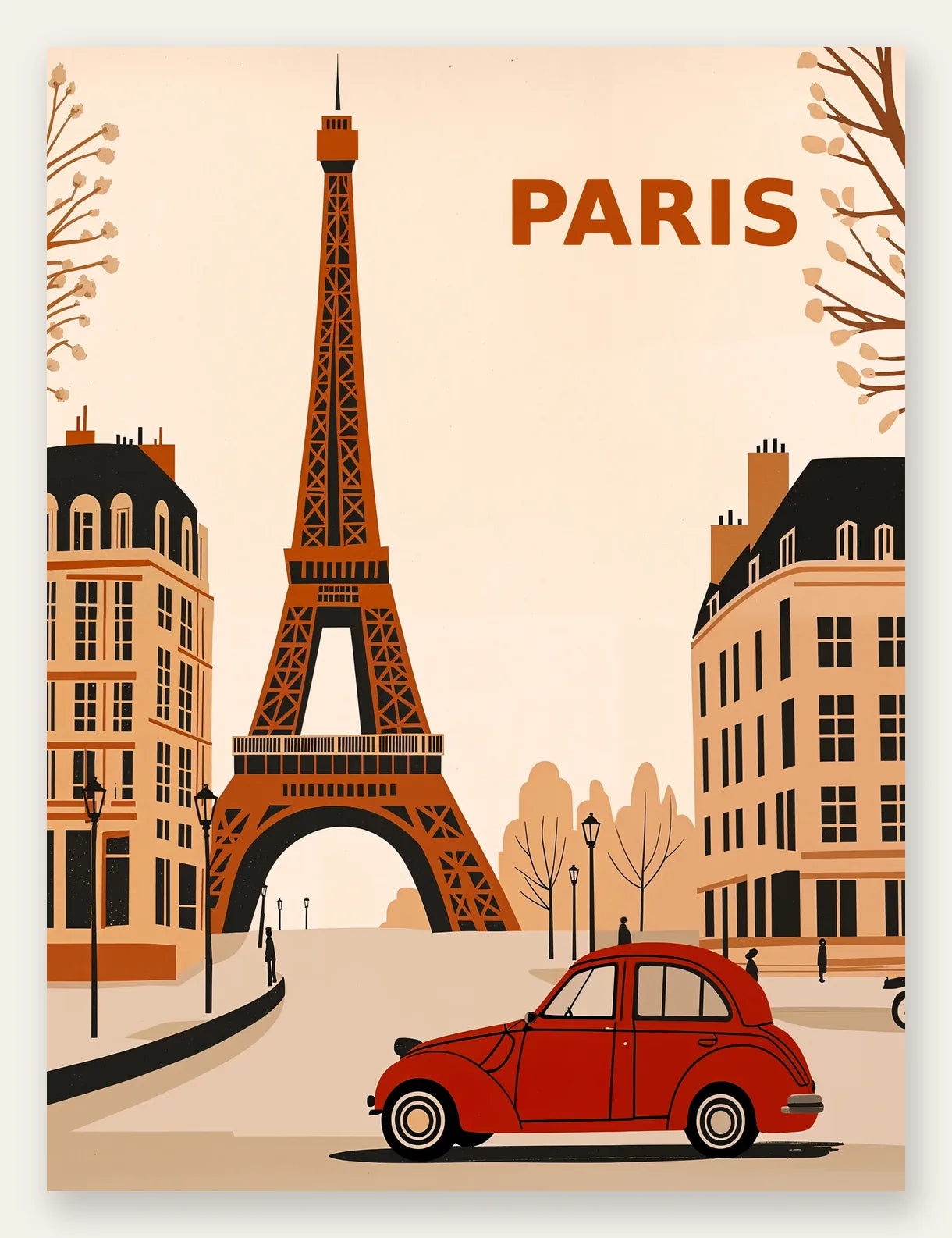
An old poster is a printed object with its own history. A reproduction is a new print of an existing image. A contemporary retro design borrows visual cues from an earlier era without being a historical document. To understand what you are buying, read exactly what the product listing says: the age of the paper, the printing process and the identity of the image are separate questions.
Original, reproduction or retro design: the differences
An original is the historical item itself. Its paper, inks, signs of wear and physical history are part of the object. If age or value matters to your purchase, ask what evidence identifies that particular copy. A distressed look in a photograph does not establish a poster’s age; for an important piece, specialist advice may be appropriate.
A reproduction is newly printed from an image that already exists. It may use an old composition, but it is not the period copy. The wording should make clear that it is a new print. The word “reproduction” alone does not tell you the printing method, paper or whether the image has been retouched; check the product description for those details.
A contemporary retro-inspired design is a new image that may borrow a period layout, colour palette or type style. It can evoke the past without being a historical document. It is more accurate to describe it as a vintage-style design than to assign it an undocumented author or origin.
What to check in a product description
Start with the product name and description. Look for clear terms such as “reproduction”, “reprint” or “contemporary design”, and check that they describe the item you will receive. A staged photograph shows how an item is presented; it does not prove the age or material of the print.
Check the practical details actually listed: available dimensions, material, whether a frame is included and which variants are offered. A size or material shown in a room scene is no guarantee that it is included. If an important point is unclear, ask before ordering instead of inferring it from an image. Browse vintage posters, then read the individual listing to see whether a design is an original, reproduction or contemporary creation.
How to protect an original
If you own an item that may be old, limit repeated handling and avoid trying to clean, glue or retouch it yourself. Physical treatment can alter the paper, inks and marks that help someone assess it. For a family poster, inherited piece or document whose provenance matters, consult a paper-conservation professional before intervening.
Physical restoration works on the object itself. Digital work on a photograph or scan is different: it changes an image file and may be followed by a new print. A new print from a file does not restore the original paper, and what can be done depends on the file. Keep these two kinds of work distinct.
Choosing an image for your décor
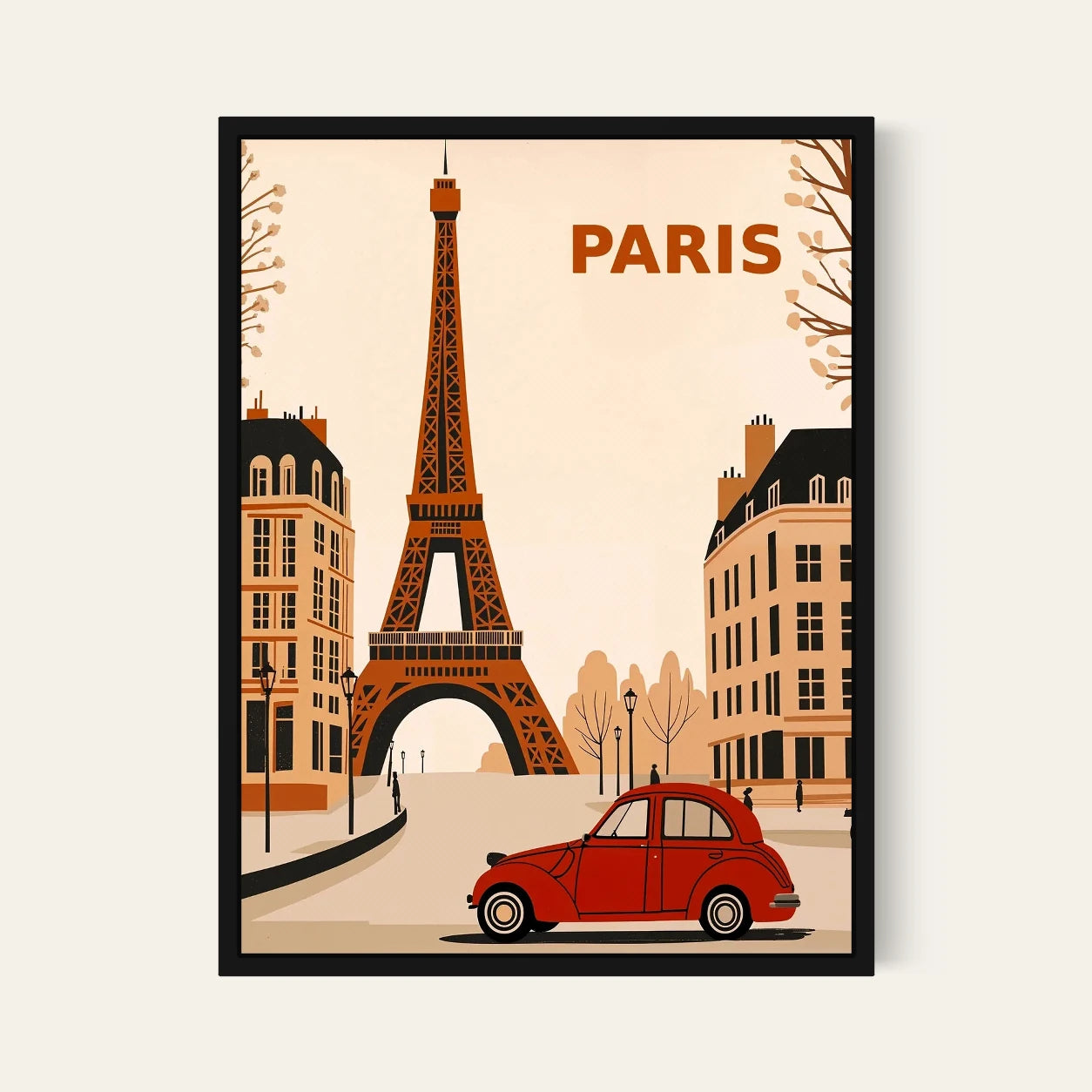
If your priority is the atmosphere of a room, a reproduction or retro design may suit you without being presented as a collector’s item. Choose the image and mood first, then check the material and dimensions in the listing. A poster, canvas and metal print are different objects, so check each one’s own description.
An image with an old-fashioned look can still be a recent creation. That does not diminish its decorative appeal; it helps you choose between the look you want and the object’s material history. If the maker, date or technique matters to you, look for that information in the individual listing.
If you are choosing a Paris image as a gift, our guide to choosing a Paris image and format can help you think about the motif and how it will be used.
Preparing a new print from your own image
If you have a photo or scan of a personal image and are considering a new print, check the file first. Its quality and dimensions affect the result. A new print is a separate object; it does not physically restore the original.
By Cédric des Lauriers • Montmartre Poster