An entryway, evening. On the wall facing the door, the New York skyline stylized in vertical lines, midnight-blue ground, golden strokes rising upward. The console below holds a lamp and a mirror, and the whole thing stands by the sheer force of symmetry. That is the Art Deco signature: a clean geometry, a taste for the summit, and just enough gold to catch the light.
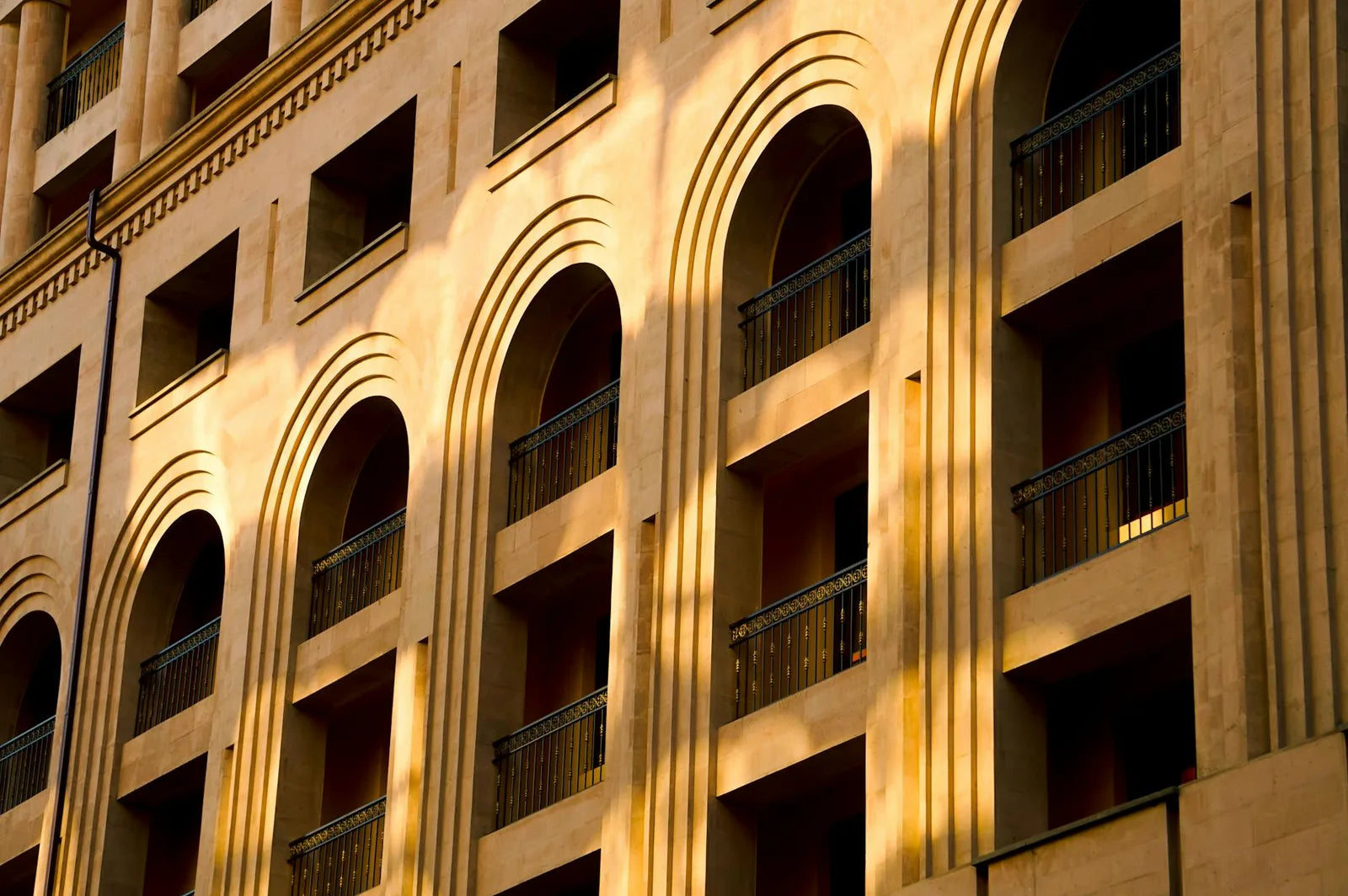
Art Deco emerged in the 1920s, its name coming from the International Exhibition of Decorative Arts in Paris in 1925. It is the style of ocean liners, skyscrapers and travel posters, the style of Cassandre and the great companies. At home, it is recognized by three things: the straight line and the angle, assertive symmetry, and stark contrasts, black and gold, midnight blue and cream. Good news for anyone decorating, these codes are simple to reproduce.
Geometry, symmetry, gold accents
Art Deco loves order. A poster is best placed at the center of a wall, aligned with a piece of furniture, never at an angle or offset by chance. If you hang two pieces, let them answer each other in mirror image, on either side of a fireplace or a sideboard. The motifs themselves play the vertical and the radiating, stylized suns, skyscrapers, fans. For gold accents, stay measured: a thin brass frame, a lamp, an object on the console are enough. Gold works in touches, not by surface. Too much gold, and the room turns into a hotel-lobby pastiche.
Dining room and entryway
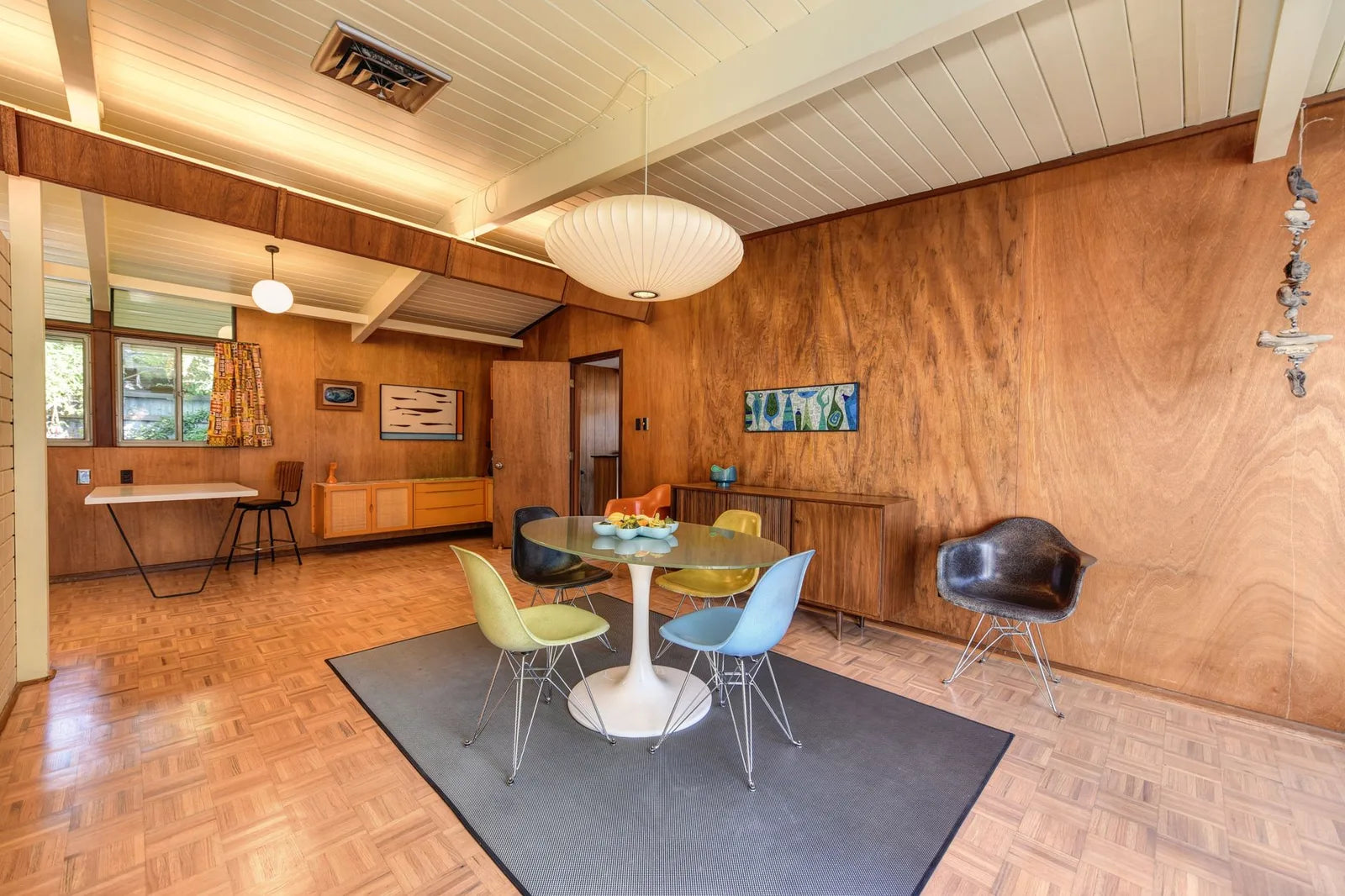
- Dining room: one large poster centered on the wall, at the eye level of a seated person.
- Entryway: a strong vertical motif, skyline or travel poster, setting the tone right at the door.
- Symmetry: two identical posters mirrored, on either side of a piece of furniture or a console.
- Light: a sconce or a low lamp that plays up the gold accents at dusk.
The black frame
On Art Deco, the black frame is not a detail, it is a given. Black extends the clean contours of the style, frames the planes of color the way a lock frames a key, and gives the gilding its full brilliance by contrast. Prefer a matte black frame to a glossy one, closer to the spirit of the 1930s, and choose a simple profile, with no molding. A thin white margin between the frame and the image strengthens the geometric legibility. On a dark wall, midnight blue or deep green, the same black frame disappears in favor of the motif, and the effect becomes theatrical.
Art Deco does not decorate a wall, it orders it. A line, an axis, a black frame, and the room suddenly puts on evening dress.
At Montmartre Poster, the Art Deco and vintage collections gather skylines, travel posters and stylized sporting figures, in the graphic spirit of the 1920s and 1930s, printed on 275 gsm art paper. Enough to give an entryway or a dining room the clean, gilded air of that era.