An intuition first: the frame matters more than one thinks. A good poster in a bad frame becomes unremarkable. An average poster in a beautiful frame takes on another dimension. The frame is what transforms a printed image into a decorative object.
At Montmartre Poster, we offer three woods. Natural oak, matte black, white. All our mouldings are solid wood (not MDF veneer), of European origin, 18 mm profile. Anti-reflective Plexiglas glass 1.5 mm. Integrated cream mat 4 cm. Dimension details are in the product sheet.
Natural Oak
Oak is the warmest of the three frames. It warms the cold colours of the poster and gently marks the edges without dramatising them. It works very well with: botanical illustrations (where the wood echoes the nature depicted), landscapes, Japonisme (where it recalls the light wood furniture of traditional interiors), and Art Deco works in beige and bronze tones.
It is the default frame in Scandinavian, japandi, or simply contemporary light-dominant interiors. It integrates into a room where the furniture already includes wood (light parquet, oak dining table, open shelves). On a very white wall, it provides the touch of material that prevents the whole from feeling cold.
Matte Black
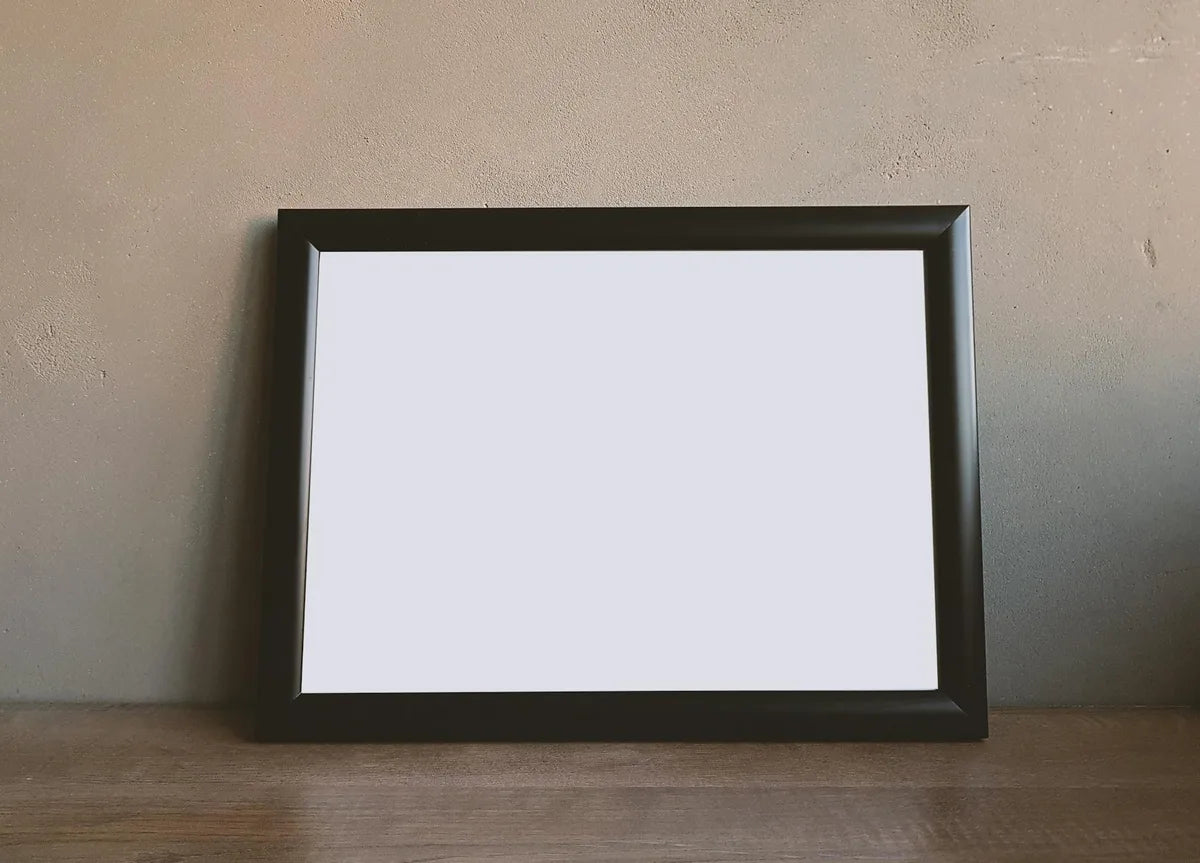
This is our default recommendation when you are hesitating. Matte black works with almost everything. It makes highly coloured works (Matisse, Kusama, saturated Art Deco) stand out by absorbing peripheral light. It disciplines very busy compositions. It is neutral, timeless, and never goes out of fashion.
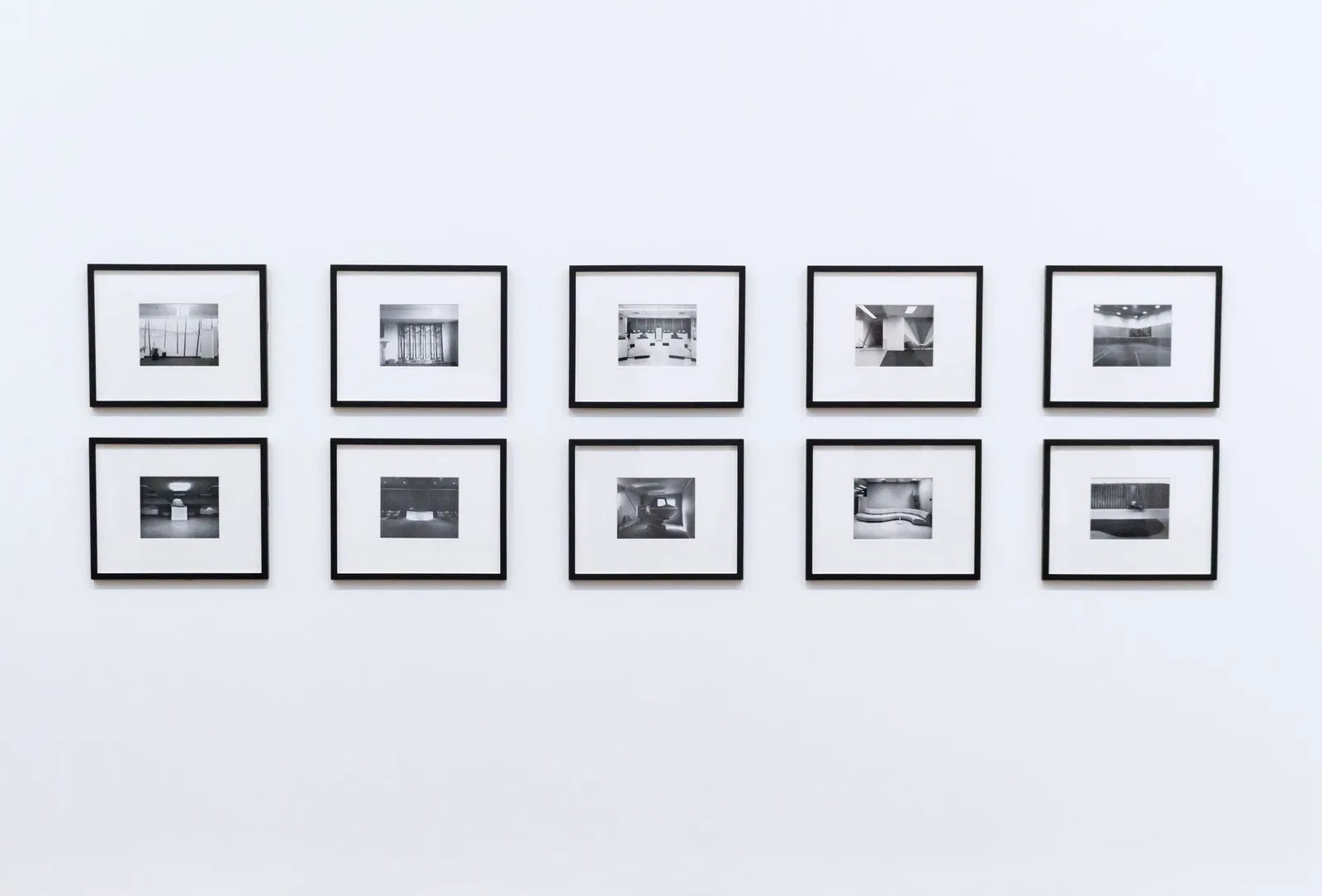
On a gallery wall, it is also the frame that allows the most different works to be mixed without appearing incoherent. If you are planning a wall with 4 or 5 posters of varied origins, go all black. The composition holds together on its own. Minor drawback: on a very dark wall, black disappears, and you then need to switch to oak or white to restore contrast.
If you are unsure, go black. It works in 80% of cases.
White
The white frame disappears into white walls. That is its purpose. It suits ultra-minimalist compositions where you want only the work to be visible, and where the frame acts as a neutral border with no visual appeal of its own.
It works particularly well with black and white photographs, works with a very wide mat (where the cream of the mat itself becomes a graphic element), and abstract contemporary works. It does not suit older works, very warm colours, or busy compositions (where it lacks presence).
The Mat
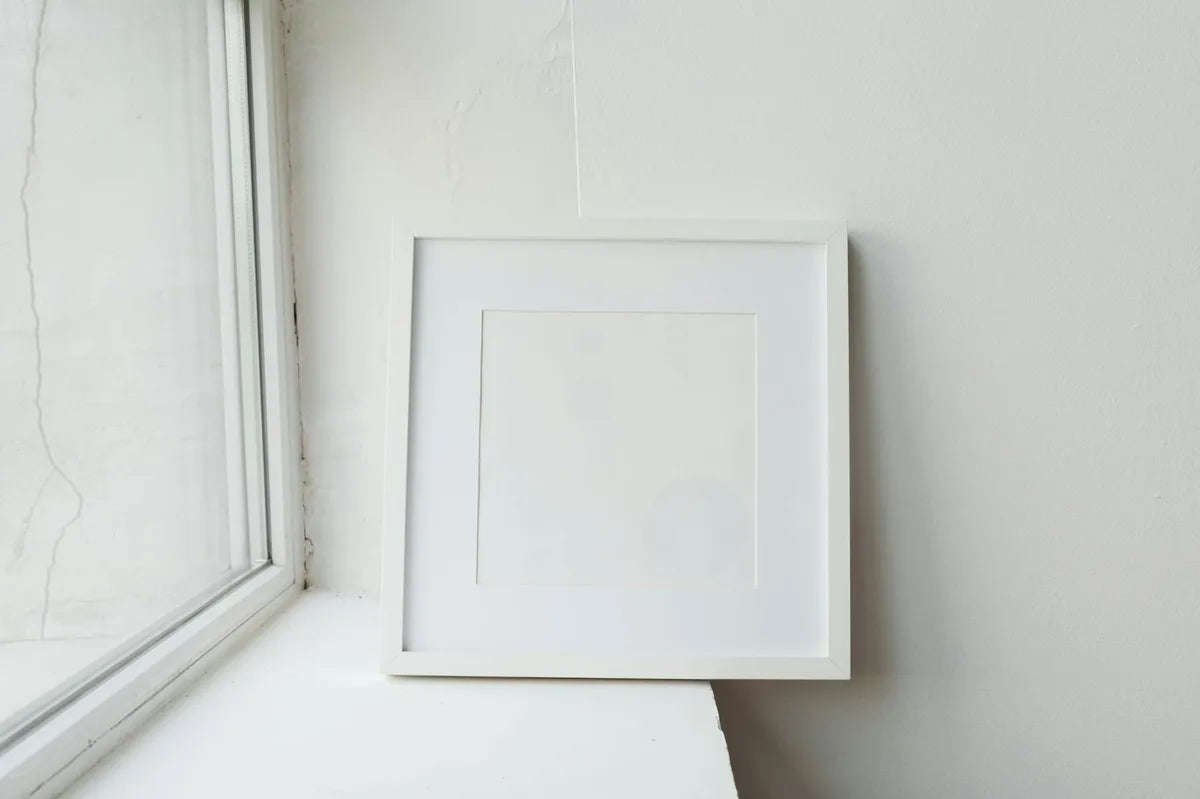
All our frames include a bevelled cream cardboard mat, 4 to 5 centimetres around the poster. It is a detail that makes a great difference. The mat separates the work from the frame, gives it air, recalls the museum role of the frame (to protect, to distance). Without a mat, the frame merges with the poster and the whole loses legibility. This is why we do not offer frames without a mat: it would be technically simpler, but visually disappointing in 9 cases out of 10.
Sizes, Quick Reference
- 30 by 40 centimetres: corridor, kitchen wall above a worktop, bedside, reading corner. Intimate format.
- 50 by 70 centimetres: living room, bedroom, dining room, above a sofa or sideboard. Standard format, the most versatile.
- 70 by 100 centimetres: large open wall, entrance hall, double living room, high ceiling. Bold format, does not go just anywhere.
For very large walls (more than 3 metres wide), consider a composition of several frames rather than one giant single piece. Visually, it is almost always more interesting.