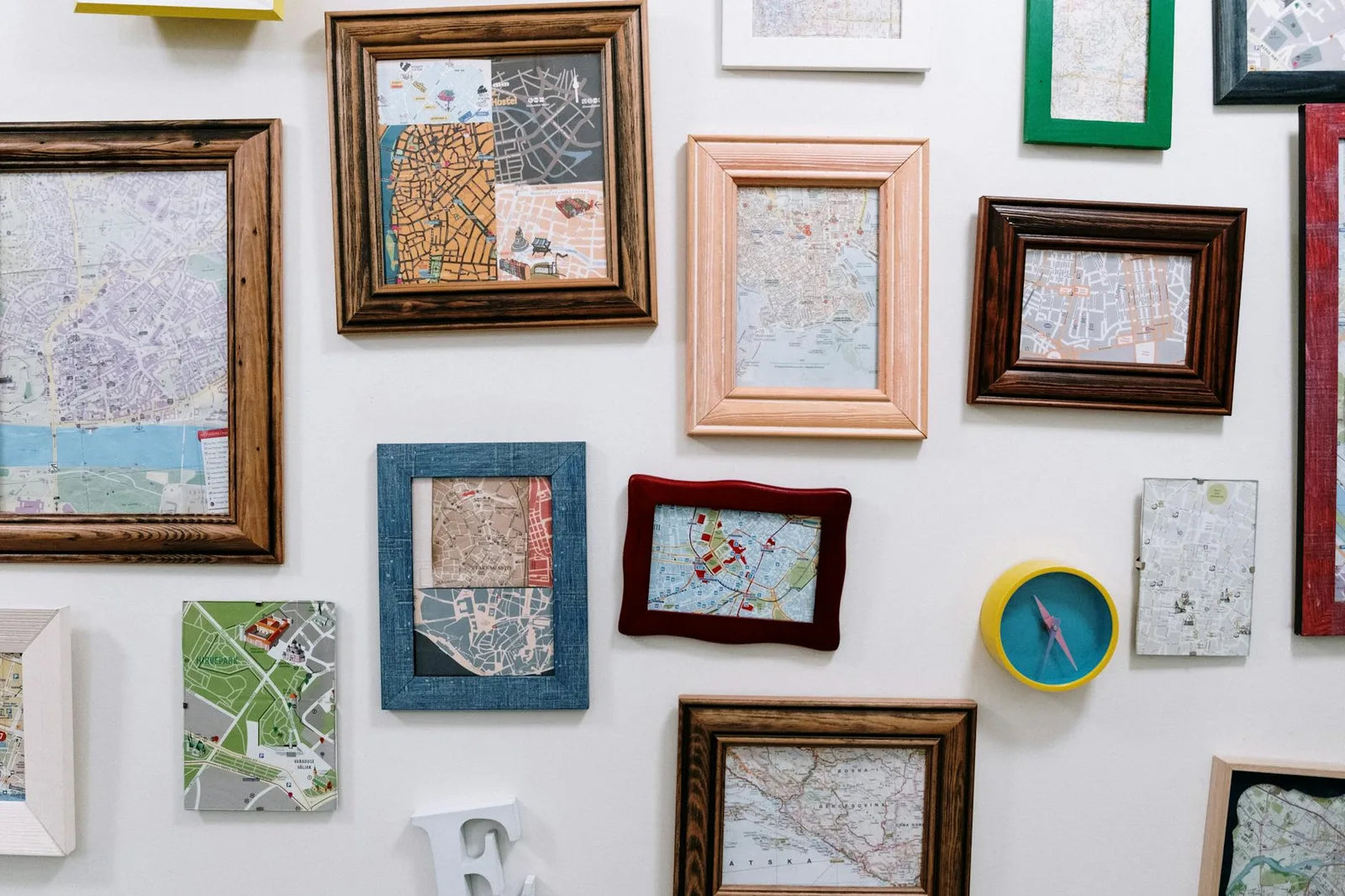
The question most people ask when they start taking an interest in art posters: where to begin? The useful answer is not "buy what you like" (too vague) or "follow the decorating rules" (too rigid). It is: first look at the dominant style of your living room, then find posters that fit it - or that contrast with it intentionally.
The minimalist living room
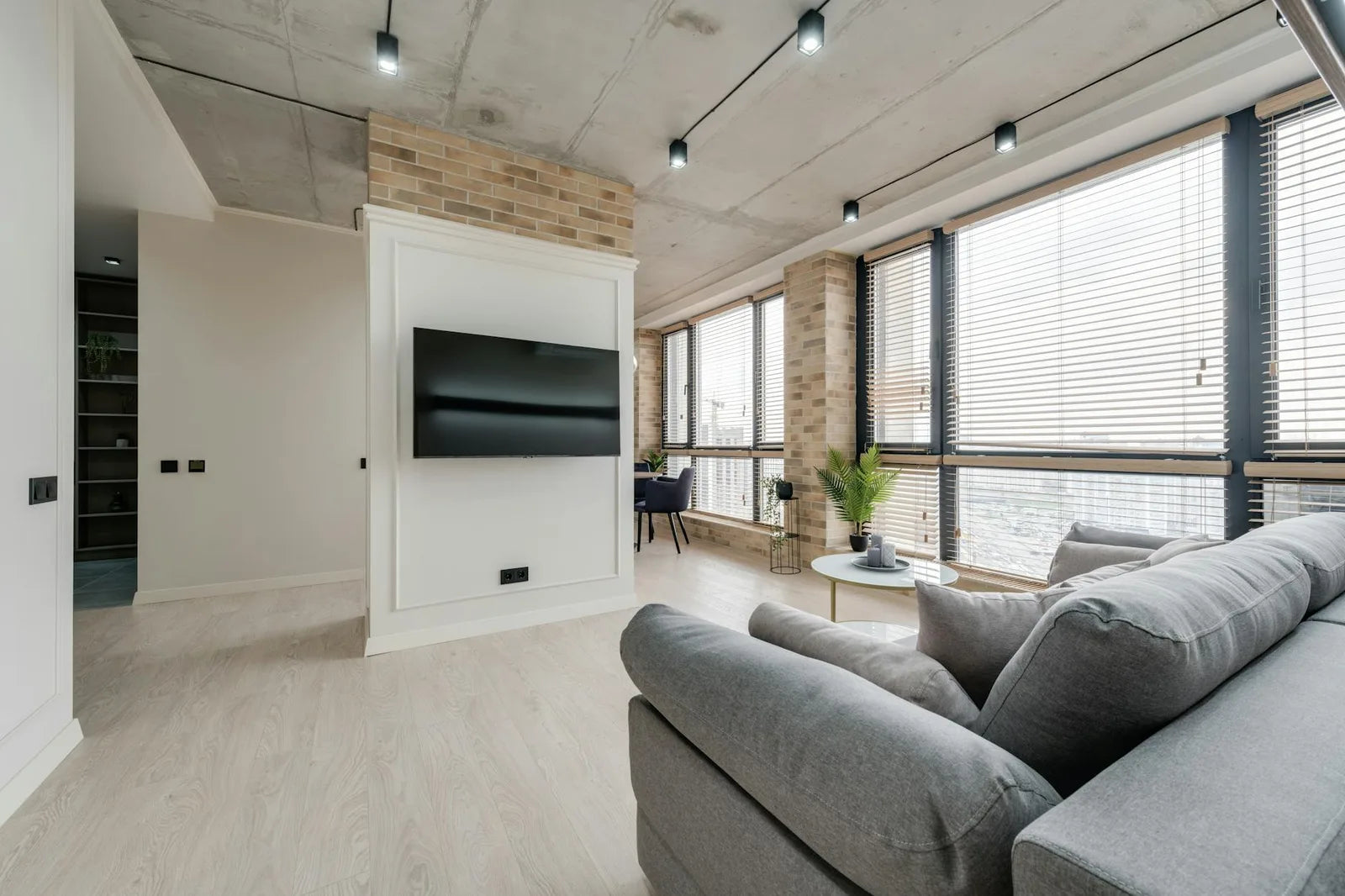
A minimalist living room has few pieces of furniture, clean surfaces, and a limited colour palette. Posters that work well here share these qualities: spare compositions, light or neutral backgrounds, few colours. A geometric Bauhaus poster, a botanical plate in black and white, a simple typographic piece. One large work, or two small ones strictly aligned. Frame: matt black or oak, to mark the contrast without overloading.
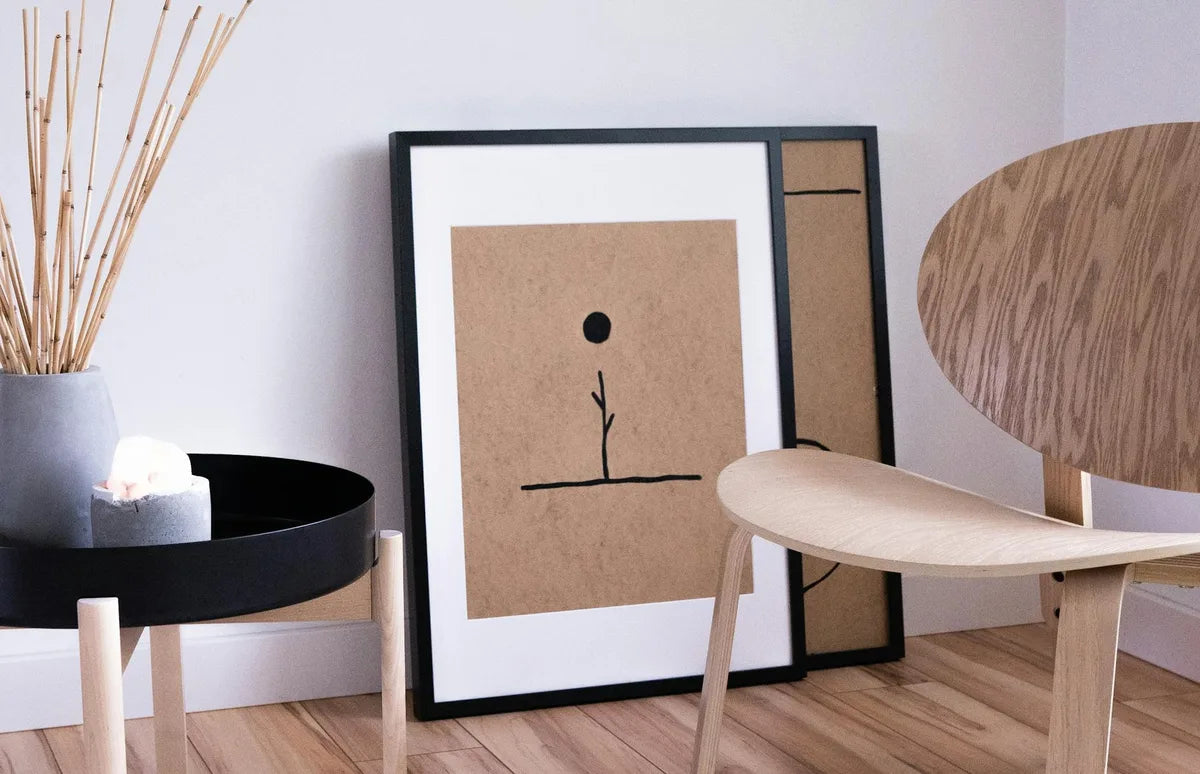
The mistake to avoid in a minimalist interior: a gallery wall that is too crowded. If you have five posters you like, choose two for the living room and distribute the others through the rest of the home. A cluttered wall in a minimalist space breaks the style more surely than no posters at all.
The warm living room
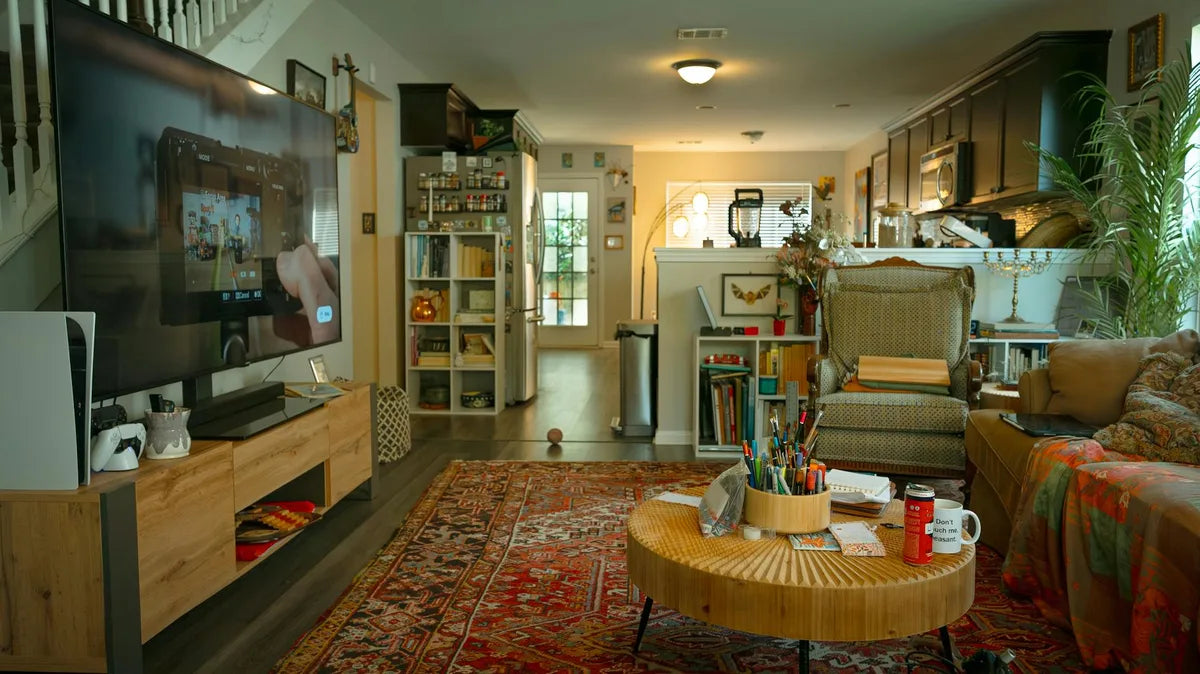
A warm living room has textile surfaces, warm colours (ochre, terracotta, olive green, brick), dark wood or rattan. Posters that fit: colourful botanical illustrations, vintage posters in sepia and mustard tones, Art Déco prints with gilding. Natural oak frame for harmony, or black to frame the key pieces. Mixed formats are possible as long as the overall palette stays coherent.
The vintage living room
A vintage living room embraces its references: 1950s-70s furniture, brass lighting, patterned wallpaper. Belle Époque travel posters have a natural place here: a PLM Côte d'Azur poster above a 1960s teak sideboard makes perfect period sense. Sports posters (tennis, cycling, skiing) from the 1930s work too. Gold or brass metal frame if you have other metallic elements in the room.
A vintage living room is not a decor frozen in the past. It is a dialogue between objects from different eras, organised around a shared tone.
The graphic living room
A graphic living room plays on strong contrasts, black and white, geometric structures. Bauhaus posters are right at home here. Typography posters, abstract compositions, minimalist plates. Always a black frame. One or two formats maximum: the graphic living room does not like accumulation, unless the accumulation is itself constructed (perfect grid, identical formats).
A few questions to ask before buying: what is the dominant colour of your sofa? What colour is the floor or the rug? Are there already patterns in the room (textiles, wallpaper)? If so, the poster should generally be more restrained than what you might otherwise choose. If the room is neutral, you have more freedom.