Practical guideRead 5 min
Decorating with landscape posters: opening a window on the wall
A line of horizon, depth, calm. How to choose a landscape, where to hang it above a sofa or bed, and when to prefer a warm horizon over a cool one.
Landscape is one of the oldest subjects in art, yet it took a long time to become a genre in its own right. It needed the Dutch landscape painters of the seventeenth century, then the Romantics, for nature to stop being mere scenery and become the central motif. In Japan, ukiyo-e raised it to a peak with Hokusai and his Thirty-six Views of Mount Fuji (around 1831), while in the twentieth century Cubism and dot art offered radically new readings of it. These landscape posters bring those viewpoints together: mountain, sea and village, treated from the most figurative to the most abstract.
Here you will find Takahashi Shotei's snow-covered Mount Fuji, several versions of Hokusai's Great Wave off Kanagawa, Yayoi Kusama's dotted mountains, but also Georges Valmier's Cubist La Ciotat and an orange Mediterranean coastal village. Calm and grounding, these views open a wall like a window: above a sofa, in a bedroom or a reading corner, they set a horizon and quieten the room.
Discover also: Vintage Travel, Japanese Art and Architecture. Collection favourites: Poster Mount Fuji Snow Lake Woodblock . Takahashi Shotei and Poster La Ciotat Cubist Landscape . Georges Valmier.


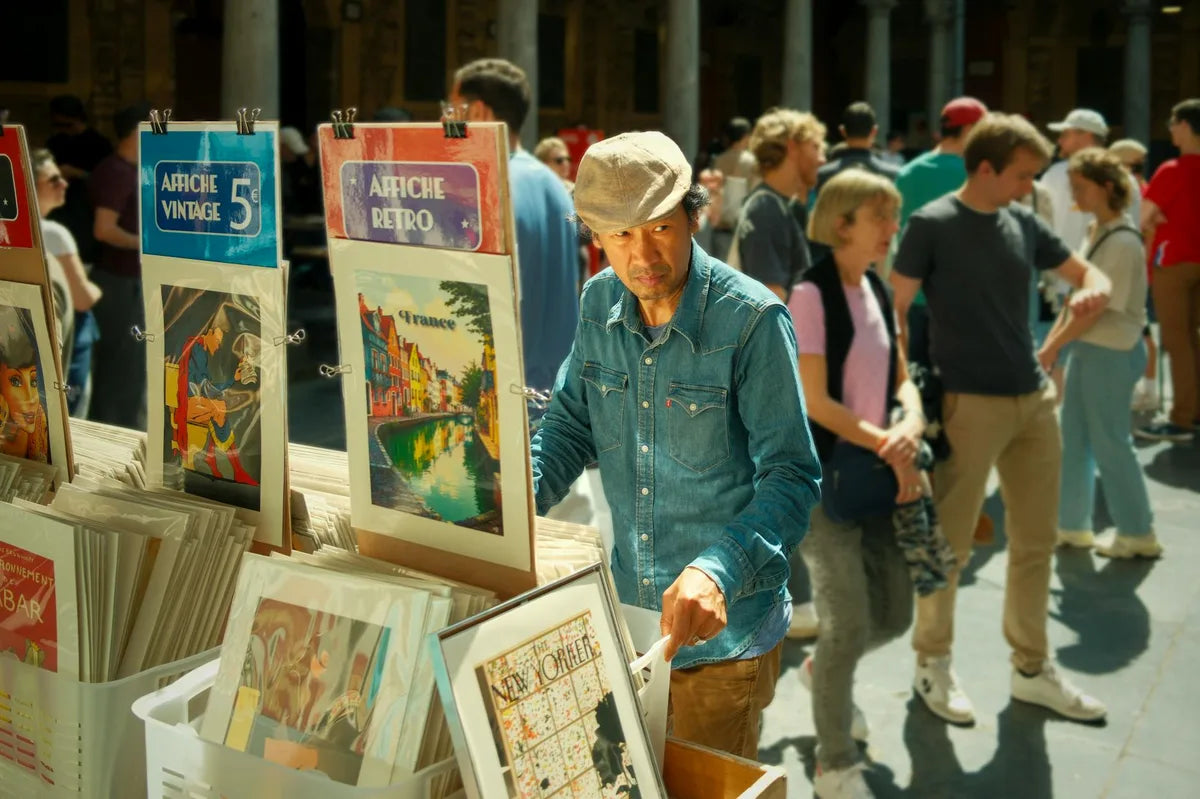
A line of horizon, depth, calm. How to choose a landscape, where to hang it above a sofa or bed, and when to prefer a warm horizon over a cool one.

30x40, 50x70 or 70x100: the right size depends on the wall, the furniture, and the reading distance. Three simple rules, and a few concrete examples.